
Rating: 5/5 Hallways
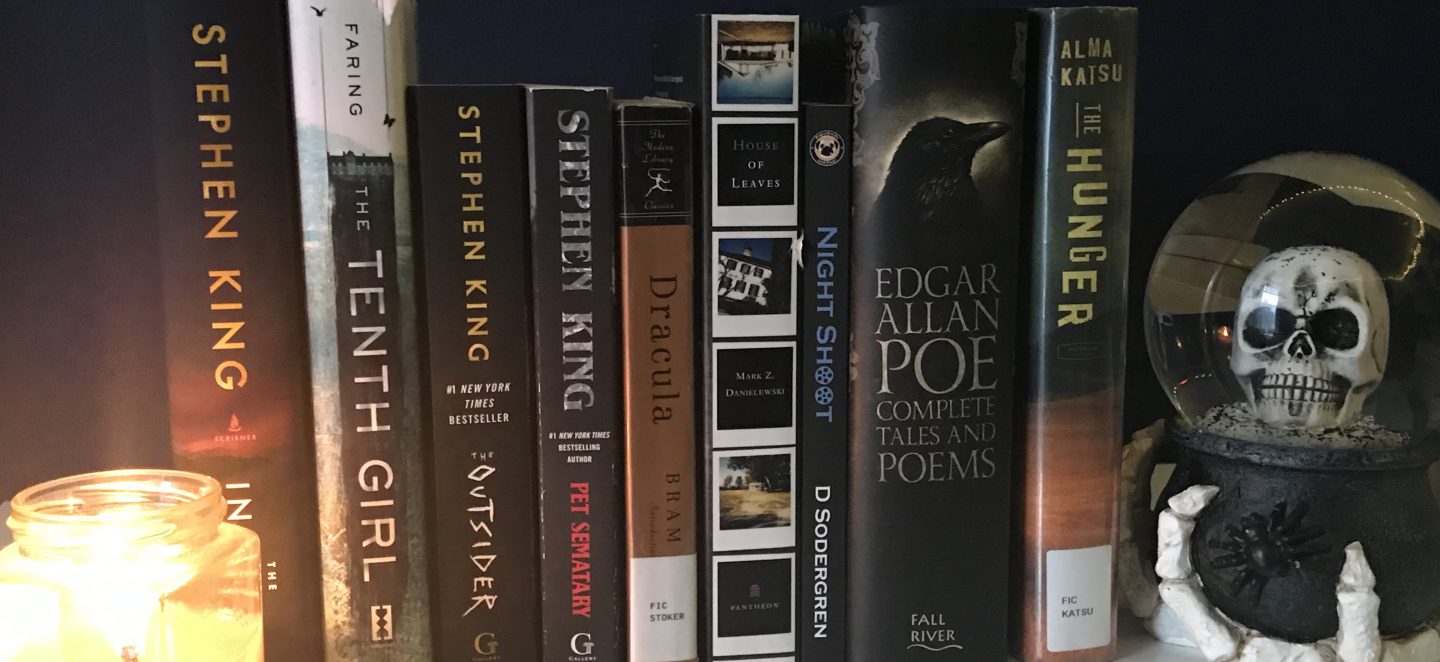
Communication theorist Marshall McLuhan said, “the medium is the message,” i.e., the format of a message may be as important as the content of said message. No book exemplifies this concept more than House of Leaves by Mark Z. Danielewski. Despite the popularity of this book, it has yet to be made into an eBook; given that its text is sometimes backwards, upside down, and sideways, House of Leaves can only be a physical book. (And there’s absolutely no possible way it could be adapted for film.)
House of Leaves is a book put together by a young man named Johnny, who is compiling writing by a recently deceased man named Zampanó. Zampanó’s writing about a film called The Navidson Record, which doesn’t exist in the real world or in the world of House of Leaves. The Navidson Record follows a family who moves into a house that seemingly doesn’t make sense: Its interior dimensions are larger than its exterior dimensions. The house shifts unpredictably and dangerously, leaving the family and the home’s inhabitants in peril.
This plot is deliberately convoluted and mazelike. The twists, turns, and immersive nature of the book mirror the labyrinth of the house. At times, Johnny will interrupt Zampanó’s writing with a several-page-long footnote about something he’s going through in his personal life. Readers see Johnny’s mental health deteriorate as the book progresses. He becomes so immersed in Zampanó’s writing and The Navidson Record that his life falls apart. The way he gets sucked into Zampanó’s writing is the way readers will get sucked into Johnny’s writing. Likewise, readers will get sucked into The Navidson Record and all the criticism and literature around it, and they’ll forget it isn’t even a real film in the world of House of Leaves. Danielewski brilliantly has readers mirror the plot of the book as they read House of Leaves.
House of Leaves is a captivating book full of twists and turns. (Literally. At times, you’ll have to hold the book sideways or upside down to read it.) It reads like a work of nonfiction as it has numerous endnotes, exhibits, and appendices. While parts of it may be boring, with lengthy asides about architecture, Morse code, and labyrinths throughout history, stick with it; there is a lot of information thrown out there, but it all has a purpose and will eventually pay off.
House of Leaves is one-of-a-kind and exceptionally creative. It forces readers to ask why we have to read books in a certain orientation and if they have to be read in the same order in which they are paginated. (Questions that I’ve honestly never asked.) It embodies what can happen if artists choose not to allow a medium to hold them back. For that alone, it’s a 5/5 for originality. But the plot and symbolism of the house (Is the house a representation of the self? Does the house represent introspection? Does the house bring out a person’s true nature? Is there a punishment for those who try to “conquer” the house?) make it a phenomenal read as well. Anyone interested in reading something experimental or out there must read House of Leaves.

