Baby Teeth

Rating: 3/5 creepy children
Baby Teeth by Zoje Stage tells the story of troubled Hanna Jensen, the only child of her parents, Suzette and Alex. Despite being seven, Hanna has yet to speak, and she does not attend school. (She has been to school but was kicked out. It turns out that setting garbage cans on fire isn’t OK. Now you know.) Hanna’s behavior and lack of speech concerns her mother, but Alex seems to think there’s nothing to worry about.

Rather than being relieved, Suzette is terrified when Hanna utters her first words. She speaks in a French accent and insists she is Marie-Anne Dufosset, a French witch who was burned at the stake. And Hanna’s (or Marie-Anne’s) first words to Suzette are disturbing. Is Hanna possessed? Or is it even more sinister? Is she faking possession to scare Suzette?

The book alternates between Suzette’s perspective and Hanna’s perspective. Hanna hates her mommy (she’s 7; she still thinks of her mom as “mommy,” and there’s something incredibly disturbing about her talking about how much she wants to hurt mommy), but loves her daddy. Daddy is perfect in Hanna’s mind. Suzette’s sections explore her frustration with Hanna’s behavior, her exhaustion due to being a stay-at-home mom who never gets a break from Hanna, and the pain she’s experienced as a result of her Crohn’s. (The Crohn’s took up a lot of real estate in the book, but didn’t have much of a payoff in the end.)

Suzette spends much of the book trying to get her husband to see Hanna’s troubling behavior. Hanna/Marie-Anne doesn’t seem to speak to Alex. Alex is insufferable. Alex works all day, so Suzette does much of the parenting and disciplining, which may be part of why Hanna loves daddy but hates mommy. Alex is blind to Suzette’s fatigue and refuses to see any faults in his precious daughter.

Hanna’s behavior is highly disturbing, and it quickly turns physical. Stage does an incredible job building up to these outbursts, but after the climax, the scene fizzles out. The denouement of each outburst leaves something to be desired. It feels as though Hanna lashes out violently and then quickly calms down and all her anger immediately subsides, which leaves the most disturbing parts of this book to fall flat.

In my (young, childfree person’s) opinion, the most disturbing element of this book isn’t Hanna’s behavior; it’s parenting. A wrench is thrown into Suzette and Alex’s marriage once Hanna is born. Their lives are made substantially more difficult with Hanna’s arrival, even before she begins to exhibit her disturbing behavior. But they had her and they can’t take back the decision to be parents. Suzette ends up with a disproportionate share of the work and struggle, and her (allegedly) loving husband doesn’t see or doesn’t want to see her challenges. (Sorry I called him allegedly loving. But I really can’t stand him. He just reminds me of every man who doubts everything a woman says.)

While I wouldn’t say that this book will scare the crap out of you, it has some disturbing elements. And Stage is an incredible storyteller. (Seriously, one part where Suzette described her Crohn’s almost made me puke.) The alternating perspectives help readers get into the minds of the opposing forces. (Even though Alex was the real villain. OK, I’ll stop.)

If you are interested in stories about disturbing kids, sociopaths and psychopaths, you may enjoy Baby Teeth.

Notes on the Audiobook

I love audiobooks, but I admit that some of the language and author’s rhetorical devices can get lost when I’m listening to a book during my infuriating commute. But Gabra Zackman, narrator of the audiobook, is a phenomenal voice actor. I think the creepy voice she used for Hanna made Hanna’s character more disturbing than if I had read the book in print or e-book. I highly recommend the audiobook of Baby Teeth.
Will Haunt You

Rating: 3/5 creepy books

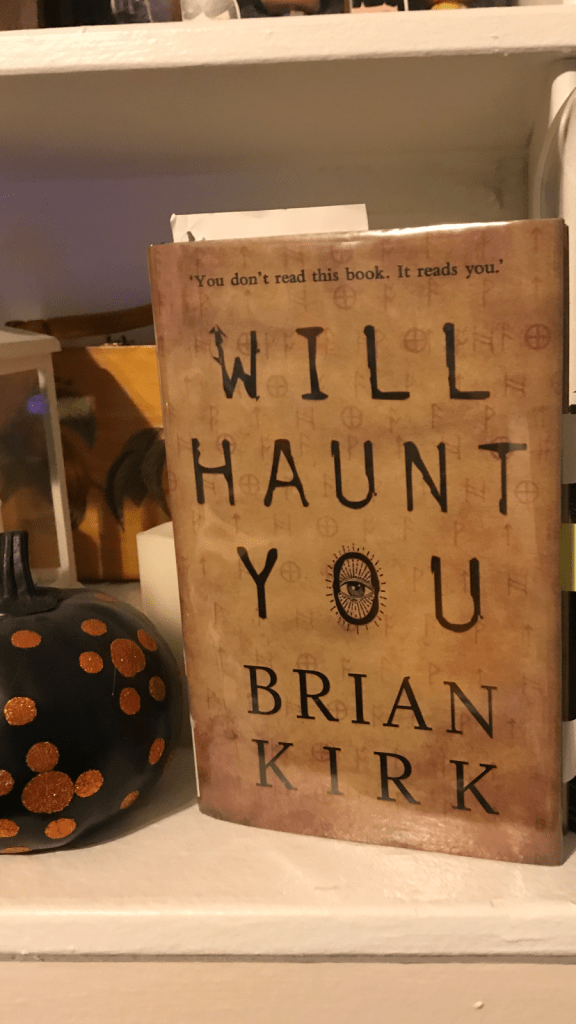
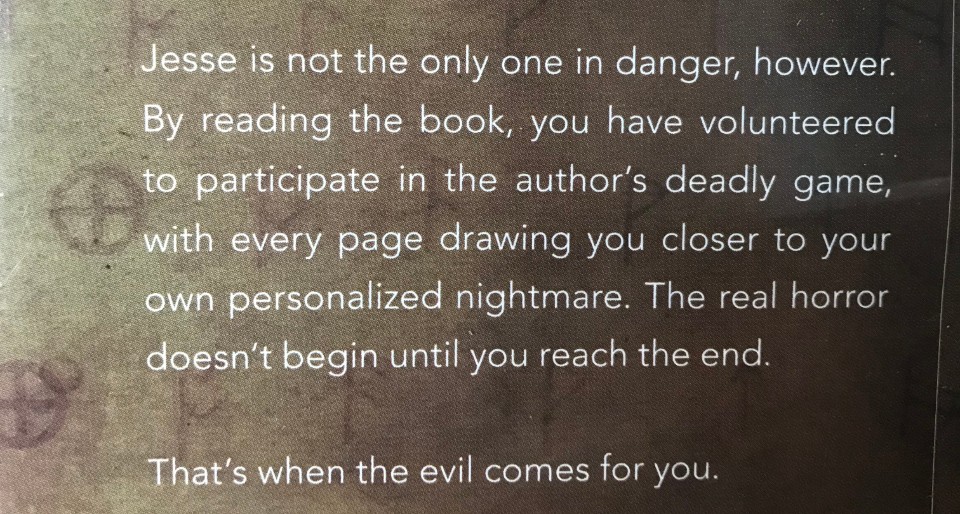
You know how in a lot of horror movies, there’s the one skeptic who doesn’t believe in the supernatural, so they taunt it, only to be the one killed in the most gruesome way? The Will Haunt You book jacket makes readers not want to tempt this potentially supernatural book. (See photo.)

Will Haunt You tells the story of former musician Jesse Wheeler. Years ago, Jesse came home drunk after a gig, and his son suffered a serious, life-altering injury while Jesse should have been watching him. That event was a wake-up call, and Jesse has been sober for years.

Jesse performs with his band after a long hiatus and manages to stay sober, despite pressure from his bandmates. He acts as designated driver for one of his bandmates, but what should have been an ordinary drive became something much more sinister.

A weird radio station he’s listening to on the drive seems to know exactly what Jesse is up to, and the car clock is stuck on midnight for what feels like ages. His car stalls and two cops appear. But something feels off…it quickly becomes clear that the cops are not there to help.

This begins Jesse’s haunting. He ends up in what initially looks like a hospital but is quickly revealed to be his own unique personal hell. He is forced to confront his demons, and just when he thinks things cannot get worse, they do. Someone knows his secrets and is using them to terrify him.

All of this is happening to Jesse because he read Will Haunt You, and anyone who reads the book becomes a part of the book’s sinister plans. Brian Kirk tells Jesse’s story of being tortured and manipulated by evil masterminds, and Kirk warns the reader that a similar fate awaits us if we continue reading. At the beginning of the book, Kirk effectively creeps out the reader by telling us that we’re next and there’s no way out.

But it’s Kirk’s promises that we’d be haunted that led the book to fall flat. The scariest element of the book is that we are next, but much of the book didn’t reference that. It’s a risky choice to break the fourth wall, but if an author’s going to do it, it needs to really draw the reader in and make an essential element of the book. It felt like it was randomly peppered in throughout the book to scare readers. The book focused mostly on what was happening to Jesse, and it felt like the fourth wall broke when Jesse’s torture got a little mundane.

Kirk does a fantastic job building suspense, but often, nothing happens with that feeling. After something bad happened, Jesse would allude to things getting much worse than they just were, which is a fantastic way to pique readers’ interest, but the worse thing was often a letdown, and I found myself left with excitement that had nowhere to go.

While this book definitely has elements that are creepy, more needed to be done to pull the reader in and make the book more immersive. The reader involvement needs to feel more engrained within the book rather than being used as a crutch to make the book feel scarier.

The Tenth Girl

Rating: 2.5/5 ghosts

Photo of the cover of The Tenth Girl

What makes horror so compelling? Is it the adrenaline rush you feel after a big scare? Is it the distraction it provides from the horrors of real life? I think Sara Faring, author of The Tenth Girl, effectively describes why I’m so drawn to horror:

But isn’t it kind of beautiful to experience primal fear? To feel your pulse quicken because a pile of well-laid stones catch shadows and carry sound in unusual ways? How often are we so bored and anesthetized by our routines—in our safe surroundings—that we lose all sense of what’s magical about our existence? (p. 48)

The Tenth Girl is told through the perspective of two characters: Mavi and Angel. In 1978, Mavi begins teaching at the Vaccaro School, a creepy, remote school in Argentina. This school, which just reopened after years of being closed, is surrounded by tragedy and horror. There are whisperings of a Zapuche curse on the house and rumors about what happened to the last students who attended the school. Angel, who is from the year 2020, is able to (seemingly) travel through time and visits the school as a spirit.

Not long after the school year starts, things become weird. Mavi has nine students and knows a tenth should be coming, but any mention of this tenth girl is shut down. One by one, the girls become ill, and Mavi’s fellow teachers begin acting strangely. Angel befriends Mavi, and the two work to determine what is happening at the Vaccaro school.

Is the house haunted? Is it a generations-old Zapuche curse? (Sidenote: This book was published in 2019. Can we stop using the annoying trope of indigenous peoples’ curses/sacrificing innocent people? It’s tired and offensive and boring.) Or is the house innocent and do evil people live in the house?

The beginning (actually the first ¾ of the book) tell an interesting and haunting story about moral relativism, loss, and the love of a mother. Had the book just told that story, I probably would have rated it higher. The ultimate issue with The Tenth Girl is the “twist you’ll never see coming” (as advertised on the back cover of the book). The twist cheapens the creepiness and compelling plot of the first part of the book, and it feels like Faring wanted to get out of wrapping up the compelling and complex story she initially set up. Perhaps the twist was too ambitious, but even the most skilled writer would not have been able to make the surprise ending not feel cheap.

Faring is clearly a talented writer, and I think she has more horror books within her. But this book tried to do too much. It made readers invested in an interesting and heartfelt story, only to conclude the book by essentially telling readers to forget that old story and get into this new plot.

(If you do not want to read any spoilers, stop reading here. Continue if you want to know more about why the twist was such a letdown. This was a very hard review to write without giving away anything.)

SPOILERS BELOW. READ AT YOUR OWN RISK.

The big twist is essentially the plot of Westworld. The reason Westworld is so compelling is because of the dramatic irony. We become invested in the town and the robots because that’s ultimately the story we’re following. In contrast, The Tenth Girl spends hundreds of pages telling one story and then concludes the book by telling another. It felt like the equivalent of a character waking up and realizing all the terrible things that happened were a dream.