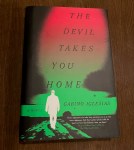
The Devil Takes You Home

A photo of the book "The Devil Takes You Home"

Rating: 5/5 Bolt Cutters

Parents may say they’d kill for their kids, but would they actually do it? If you could eventually have the perfect family but be haunted by the memory of watching someone’s last breath leave their body, could you cope? Do the ends justify the means?

The Devil Takes You Home by Gabino Iglesias is a tragic and compelling story about a man’s quest to do everything he can to preserve his marriage. When Mario’s family experiences a medical scare, money becomes tight. Mario’s flaky friend Brian tells him about a job that can make him a lot of money. Mario takes a job as a hitman and surprises himself with what he’s capable of doing, just as tragedy strikes his family. Then the promise of one big (but grueling) job proves to be too tempting for Mario to ignore. But that job puts Mario face to face with death and the extent of human depravity. When all is said and done, will Mario survive? And if he makes it, can he live with the pain he’s caused and the cruelty he’s seen?

The Devil Takes You Home is a heartbreaking story about what someone will do when driven by grief and love. Mario comes across as a good guy who loves his wife and daughter, but he’s driven by emotions that threaten to suffocate him and change who he fundamentally is as a person.

Books like this are exactly why so many people love horror. Iglesias has crafted a story that is equal parts disturbing and heartbreaking. It’s gory, barf inducing, and twisted, and I mean that as the highest compliment. Iglesias masterfully uses horror as the vehicle to tell a very human story about the lengths people will go to for family. The Devil Takes You Home is full of action and surprises, and you won’t be able to put this book down. This book is devastating and will make readers feel all the feels.

If you like other heartfelt horror like The HungerThe Shining, or The Year of the Witching, check out The Devil Takes You Home

The Haunting of Lit House’s Official 2021 October Recommendations

Halloween 2021 is almost here! No matter what kind of horror you like, the following list has a recommendation to get you ready for Halloween:

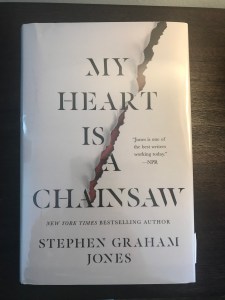
  • I love slashers: If you like slasher movies/books, you have to read My Heart Is a Chainsaw by Stephen Graham Jones. It follows the story of a high school senior named Jade Daniels, who’s probably more obsessed with slasher movies than you. She’s convinced a slasher is terrorizing her town, but because of her encyclopedic knowledge of slashers, she knows how the slasher can be stopped. But will those in charge actually believe her? The previous post on this blog has a full review of My Heart Is a Chainsaw.
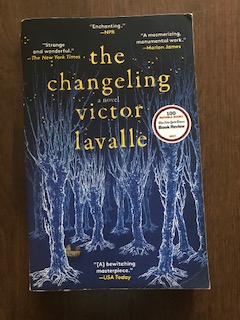
  • I want something creepy with heartThe Changeling by Victor LaValle is creepy, full of heart, and incredibly well written. It follows Apollo Kagawa’s journey into fatherhood. Soon after becoming parents, Apollo’s wife commits a terrible crime, and Apollo has to begin an exhausting search for his wife and son. The Changeling is a beautiful story about how far people will go to protect their families. LaValle’s writing style is incredibly immersive, and readers will feel like they’re joining Apollo on his journey. (Also, anything by Victor LaValle is going to have a lot of heart, so if this doesn’t seem like your jam, try anything else he’s written.)
  • I’m a big chicken. I want something Halloween adjacent that isn’t too scary: The Sookie Stackhouse series by Charlaine Harris is easily one of the best vampire series ever. The first book, Dead Until Dark, explores the ramifications of vampires “coming out of the coffin” and the havoc they wreak on a small town in Louisiana. Sookie, the main character who happens to be a telepath, finds herself enmeshed in vampire politics, which can have deadly consequences. This is a book about vampires, so it does have blood and murder, but it really isn’t horror. It’s more of a mystery with some romance thrown in. It’s the series that the show True Blood is based on. (And if you haven’t watched True Blood, you should. At least the first season.)
  • Trees are beautiful this time of year. I hate that. I want to be afraid of themThe Year of the Witching by Alexis Henderson tells the story of Immanuelle Moore, a young woman living in a puritanical town. Immanuelle finds herself venturing into the Darkwood, a forbidden forest near her town, where she finds a journal of her deceased mother. Naturally, terrible things begin to happen to the town after Immanuelle finds the journal. The Year of the Witching is the perfect feminist, witchy story for this time of year.
  • I like to watch horror movies through my fingers. I want a book that will make me do thatCoyote Songs by Gabino Iglesias has one of the creepiest scenes in a book I have ever read. I won’t give it away, but I audibly said “no, no, oh this can’t be good…no, no, no, no, OH S$!T” while reading it. Coyote Songs tells a few different stories, and each is incredibly well written and gets pretty creepy. Iglesias has the ability to give characters a thorough and in-depth backstory while progressing the plot. Coyote Songs is nearly impossible to put down, and Iglesias truly exemplifies showing, not telling.
  • I don’t know much about horror. I want a primer on horror fiction: Monster, She Wrote by Lisa Kröger and Melanie R. Anderson walks you through the women who shaped horror into the genre it is today. This book also contains information on different types of horror and is a must-read for anyone whose blood boils when people say only men write good horror. It’s one of the few books that will leave you with a longer to-be-read list when you finish it than when you began.
  • I’m interested in diversifying my reading. Anything on here by women or BIPOC? You’re in luck! Everything on this list to this point has been by a woman author and/or BIPOC author. Enjoy.
  • I want to get in the Halloween spirit, but I don’t have time to finish a book before Halloween: You’re probably already familiar with his work, but nothing gets you in the spooky spirit like Edgar Allan Poe. His poems are fairly short and will get you primed for Halloween. And his work is in the public domain, so no need to buy a new book or wait for the library to get it in stock! And if you hate reading but somehow stumbled onto this blog and made it this far, watch The Simpsons season 2 “Treehouse of Horror” episode. It doesn’t include the full text of “The Raven,” but it has James Earl Jones, and that’s a plus.
  • I don’t like scary things or Halloween. I’m reading this post to support you: Thank you for your support! It means the world to me. As a token of my appreciation, I’d like to recommend that you read Atomic Habits by James Clear. It’s a guide on how to take small steps daily to build habits that will change your life. Every day you take action, it’s like putting money in a bank where it is growing interest. And a little bit of something daily is better than doing a lot of that something occasionally. Proof Clear’s method works: I have spent most of my life wanting to exercise regularly, but I could never get the habit to stick. After applying the habit-building concepts detailed in Atomic Habits, I am coming up on one year of exercising at least 4 times per week. (Ok, I took a one-week break when I moved and another one-week break when studying for a certification exam. Still, that’s not too bad!) Take notes while reading this so you can easily reference Clear’s habit-building tips.

My Heart Is a Chainsaw

Rating: 4.5/5 Knives

What if all of the slasher movies you’ve watched were a survival guide for when a killer descends on your town? That’s just what happens to Jade Daniels, a high school senior who’s obsessed with horror novels, in My Heart Is a Chainsaw by Stephen Graham Jones. Jade suspects a slasher will appear in her hometown of Proofrock, Idaho. So when a new student, who’s clearly the final girl who can stop the slasher, joins her school, Jade is relieved. Jade is an expert on horror movies and knows how the slasher can be defeated, so she needs to give Letha horror history lessons so she’s equipped to stop whatever is haunting Proofrock.

But it soon becomes clear that Jade is battling her own demons. Will anyone in Proofrock who can do something to stop people from dying actually listen to Jade? Or is her obsession with a Proofrock killer just a desperate cry for help? 

My Heart Is a Chainsaw is full of heart (and chainsaws, as promised in the title). Jade initially seems obsessed with horror movies, writing extra credit papers for her history teacher about slasher movies. But her obsession becomes endearing. Jade’s mom is mostly out of the picture, her dad seems, at best, ambivalent about her, and she doesn’t have many friends, so scary movies are Jade’s closest companions.

The beauty of My Heart Is a Chainsaw lies in Jones’ ability to tell a creepy slasher story while simultaneously telling Jade’s coming-of-age story. Jade comes to terms with the town police and other adults in charge refusing to do anything to stop pain and suffering (a common slasher trope), and this failure is mirrored by Jade’s parents. Jones tells the story as though it were a slasher, but then he subverts frequent slasher themes to tell a story full of depth and nuance. s

My Heart Is a Chainsaw is a must-read for any fans of slasher films. Jones references a lot of slasher and horror movies, so in addition to being a great story, it’s a mini slasher history class. (And you’ll likely come away from this book with a long list of movies to watch.)

Anyone who likes slasher stories and/or stories with heart needs to read My Heart Is a Chainsaw.

PS-I’m a big baby and this book’s acknowledgements made me tear up. Jones thanks his wife and says, “My heart is a chainsaw, yes, but you’re the one who starts it.” Someone must be cutting onions on this blog post.

Holly and the Nobodies

Rating: 4/5 Nobodies

An odd little girl living in a strange house befriends you and invites you past the front gates. What could possibly go wrong?

As it turns out, a lot. In Holly and the Nobodies by Ben Pienaar, Holly Anderson, a young girl who is seemingly by herself in her front yard, talks to James, a high school student who is passing by the house. James gets a strange vibe from Holly and continues on to school. When James tells his friend Alex about this strange girl, Alex takes pity on her, thinking she may be lonely or living with abusive parents. But Alex’s decision to be nice to Holly sets off a chain of harrowing events.

Holly and her house have strange abilities. Holly can create beings, called nobodies, to keep her company. But the nobodies can’t come close to real human friends, like Alex and James. Holly knows that if she can lure Alex and James into her house, the house will do the work of keeping them there. Alex and James soon realize that if they want to survive, they need to get away from Holly’s house, but nobodies, the house and Holly want to keep them there at all costs.

Holly and the Nobodies gets readers immersed in the story immediately. Within the first chapter, it’s clear something is off about Holly. Pienaar does a fantastic job setting the scene and gripping readers’ attention immediately. Holly and the Nobodies is compelling and nearly impossible to put down. It is filled with action and keeps you on the edge of your seat.

Holly and the Nobodies is creepy, but it isn’t gory. (Which makes sense, as I’ve realized it is considered a YA book. Also, if you’re sleeping on YA horror, stop being silly. Some of my favorite horror books have been YA.) I appreciate the ability to write something odd that puts readers on edge without graphically describing violence.

The action starts right away in this book, which means readers do not know much about the main characters initially. Pienaar expertly provides clues about characters’ backstories while progressing the plot along. Readers learn about James’ negligent father and Alex’s overbearing parents as they are learning about the extent of Holly’s cruelty. It’s this ability to provide exposition while keeping readers’ interest that makes Holly and the Nobodies a fun, entertaining and enjoyable read. I highly recommend it for anyone interested in an exciting scary story.

Disclaimer: I received a complimentary ebook copy of Holly and the Nobodies for review. All opinions are my own and independent of receiving a free copy.

The Changeling

Rating: 5/5 Rare Books

Rare-bookseller Apollo Kagwa wanted to be the father he didn’t have. But a horrific act of violence against his son leads Apollo to discover a fantasy world hidden in New York City, full of the evil that feeds our nightmares. Victor LaValle’s The Changeling is a haunting, mesmerizing modern-day fairy tale that will stick with readers long after they’ve finished the book.

The Changeling follows Apollo’s journey into fatherhood. His own father disappeared when Apollo was young. Emma, Apollo’s wife, seems to have some signs of postpartum depression. Emma does something truly terrifying to the baby and vanishes. Much of the book focuses on Apollo’s journey to find his wife and baby and get some answers as to why Emma did what she did.

The Changeling is equal parts horror novel and fairy tale, with a dash of Chicken Soup for the Soul. Through Apollo’s quest, LaValle explores the complex themes of parenthood, racism, and love. It has a macabre backdrop, but The Changeling is fundamentally about how far parents will go out of love for their child.

LaValle expertly describes a fantasy world hiding in plain sight in New York City. His phenomenal, skilled world building is just one of the many reasons this book is perfection. Though the book takes place in modern-day New York City, something about it feels like a fairy tale that you, your parents, your grandparents, and their grandparents grew up hearing. It’s a universal and timeless tale that’s part of our DNA. LaValle is a skilled storyteller, and he writes The Changeling in a way that will make you feel like this is a familiar story from your childhood that you forgot, and reading it will feel like a lifelong itch has finally been scratched.

LaValle’s juxtaposition of fairy tale tropes with mundane daily things, like putting boxes in a car, makes The Changeling feel more realistic and, therefore, creepier. He has a way of writing vividly, and certain parts were so gross they’ll make your skin crawl. The way he described a warm room with all the radiators on made me feel toasty (despite being on a tundra-cool airplane).

The Changeling is a joy to read, and LaValle’s writing style makes it a page-turner. The dialog flows so naturally that reading it feels like overhearing a conversation. The writing seems effortless, and every single word has a purpose. LaValle shows readers what characters are like and what their motivations are; he never tells. It’s this masterful storytelling that makes The Changeling feel more like hearing a scary story from a relative than reading a book written by a stranger.

If you liked The Changeling, check out LaValle’s other work, including The Devil in Silver and The Ballad of Black Tom.

Miracle in the Black Lagoon

This post is a departure from my usual content. For the first time since I was 13, I wrote fiction! This piece was submitted to the Halldark anthology (an amazing upcoming Hallmark movie-themed horror anthology edited by Gabino Iglesias and published by Cemetery Gates Media) and rejected, but I had so much fun writing it that I had to share it with the world. I had no idea I’d love writing fiction so much. This is my first piece in ages, but I promise it won’t be my last! (Did that sound vaguely threatening? I hope so.)

The Amazon

“I can’t believe Jesk wants to build on this glorified swamp,” thought Roy Brooks, chief resort officer, hired to oversee the Daintree resort project. Daintree’s CEO, Jesk Duerto, insisted on building a resort next to this lagoon. Something about being here, even in the middle of the day, gave Roy the creeps. He could’ve sworn he heard splashing in the lagoon, but no one was there. A chill crept up Roy’s spine, despite the oppressive heat. To drown out his uneasiness, he unwrapped the candy cane his wife sent him in a Christmas care package and quietly sang a song to himself: “I won’t ask for much this Christmas/I won’t even wish for snow.”

Roy started this job about a year ago. He liked his new job a lot for the first few weeks, despite being thousands of miles from his family, but he soon realized this project would be the death of him. He did numerous environmental impact studies, and every single one said Daintree’s resort would probably kill off a lot of the creatures in the adjacent lagoon. But Jesk said that didn’t matter. The profits that could come with building this resort would be substantial. So Roy went ahead with the plans.

And now he stood in the heat, sweat dripping down his face, and wondered why Daintree even had to get into the resort business. Wasn’t being a huge online retailer and tech leader enough?

He was so deep in thought that he didn’t hear the splashing coming from the lagoon behind him. He stepped away from the resort site, with his back to the lagoon, to try and envision the resort on this patch of land. He knew he should take some photos of the area for the architects.

As he began patting his pockets to find his phone, a massive clawed fin reached toward Roy’s ankles. Before he could know what was happening, he was dragged on his belly toward the lagoon. He tried to kick at whatever dragged him, but it didn’t seem to matter. This person or thing was powerful.

Roy reached around blindly for something to grab. Twigs and rocks in the sand scratched his face, stomach and legs. Just a few feet from the lagoon, Roy grabbed a branch from a nearby tree. He held on with all of his might, splinters be damned. But whatever was pulling him was stronger. He started to lose his grip, and pretty soon, he was hanging on by the tips of his fingers. He could hear his shoulders popping and his fingers cracking, and he lost contact with the branch. Soon, he was underwater, the cuts on his body on fire from the salt water.

And as quickly as it started, it ended. The lagoon looked beautiful and calm, aside from a floating candy cane and a small red plume where Roy went under.

New Jersey

“No, ma’am. I apologize, but your policy only covers the boat capsizing, not fires,” said Gil. His eyes fell on a piece of paper pinned on his cubicle wall. It was a picture of the Cheshire Cat, and under its photo, it said, in Papyrus font, CUSTOMERS CAN HEAR YOU’RE SMILE! He immediately smiled, despite how much the use of the wrong “your” bothered him.

“Well that’s not fair,” pouted the woman on the phone. “Do you know how finicky boat batteries are? One little mistake with the battery and poof! Why do I have a policy just for you to tell me you can’t help me when I need it? What kind of policy is that?”

Gil smiled even wider and put on his best customer service voice. “I’ll tell you what, ma’am. I may be able to help you.” Gil lowered his voice to a conspiratorial whisper. “My boss would kill me if he found out, but I’ll cover your boat. We’ll wire the money to your account ending in 1225. It’s my holiday gift to you.”

“Oh! Bless you. Merry Christmas, and have a happy new year! You are doing the lord’s work.” She hung up before Gil could change his mind.

The truth is that Gil wasn’t breaking any rules. (He reread the employee handbook annually just to be sure he hadn’t accidentally violating a rule.) Each customer service rep had discretionary funds they could give to customers over the year. Gil always waited until December to give out this money.

Gil looked at his watch. There were still 40 minutes until his workday ended. Gil normally didn’t watch the clock obsessively while working. His bosses at the Montpelier Insurance Company always praised his work ethic and focus. He hadn’t been promoted, despite the fact that he worked twice as hard as his non-amphibious colleagues who’d get promoted every 18 months, but he didn’t mind. He was paying his dues, and he knew that monsters always had to work 10 times as hard as humans for the same recognition.

But today was different. It was the day before the office closed for Christmas, and Gil was looking forward to having a few days off. He never went anywhere for Christmas, but he still had a special Christmas routine. On Christmas Eve, he’d pick up a huge dinner from Boston Market and watch his two favorite movies, Love Actually and The Wizard of Oz, from the library. Gil’s grandpa, his mom, and his dad loved The Wizard of Oz, and Gil grew up watching it every Christmas Eve.

He looked down at his fin again and saw that it had only been 3 minutes since he last looked at the time.

He snapped out of his daze when his phone rang. He looked at the phone and saw it was his dad. “Hey dad.”

“Hey, merry Christmas! How’s it going?” asked his dad, Oscar. They exchanged pleasantries for a while. After catching up on Gil’s job and asking if Gil had any special lady creatures in his life, Oscar got down to the reason for the call. “Gil, I know you don’t like being home. But I think you need to come home this year. It may be the last year the lagoon is my home, and I’m not even sure I’ll be able to survive the next couple years.”

Gil was prepared for this call; every year, his dad told Gil to come home. And every year, Gil said he was busy with work. But the truth was that Gil hated his home. He spent his whole life fighting against being from the Black Lagoon, despite being something of a hero. Humans made a documentary in the 1950s about his grandpa defending the lagoon with everything he had. But Gil hated the lagoon. It was dirty, barges rode over it blaring their horns at ungodly hours, and strangers often showed up to poison the water and kill Gil’s fish friends/food. But Oscar’s admission that he may die soon shocked Gil.

“What do you mean you won’t survive the changes? What’s going on? Should I send you money for a boat ticket to get out of there?” asked Gil.

“Abandon my home? I know you think you’re better than me because you live on land in an apartment, but this is our home. Our people lived here for generations. My dad fought hard to keep this lagoon safe from invaders. And you want me to leave it at the first sign of trouble? Fat chance. I’m going down swinging,” huffed Oscar. He paused for a moment and then sighed, sounding defeated. “Daintree wants to build a resort on our lagoon. The traffic, construction, and people swimming in our home with that nasty SPF and deet shit means certain death for us. Gil, I want you to come home to see your house and dad for the last time. I know you won’t fight for your home like I have been, but say goodbye.”

Gil couldn’t stand to see his dad so comfortable with the prospect of his own death. “I’ll be there as soon as possible,” Gil muttered softly. After hanging up, he bought tickets home and cancelled his Boston Market Christmas dinner. But he made sure Love Actually and The Wizard of Oz were on his packing list. Just because he had to go back home didn’t mean he couldn’t celebrate Christmas as usual.

Planes, Trains, and Boats

Getting home would be a long ordeal. Fortunately, Gil had a lot of credit card points with which to buy a ticket. At the airport, he got upgraded to first class. He thought that if he had to go back to his nasty, swampy home, at least he could do it in style.

At the boarding gate, Gil got in the line for first-class passengers. He watched the cable news channel PST, which was doing a piece on the backstory of Jesk Duerto, who was on track to become the world’s first quadrillionaire. “Good luck to Jesk Duerto. I know I spend enough at Daintree to get him to that finish line. A reminder that Daintree is the parent company of PST,” said the anchor, smiling and showing off her bright veneers. “In more somber news, Roy Brooks, Daintree employee, still has not been found or heard from. Duerto is offering a reward of $1,000 for anyone who has information that could lead to finding Brooks. And after the break, we’ll show you the hottest toys this Christmas.”

Gil’s attention was pulled away from the TV by a piece of popcorn shrimp that was thrown at him. “Wow, I guess anyone can travel first class nowadays,” snickered a college-aged boy to the khaki-clad, Sperry-wearing, frat-boys he was traveling with. This brat must have thrown the shrimp. “You don’t even need a pulse!”

Gil tuned them out. He wanted to claw their eyes out and pull their hearts out of their chests, asking if he’d be able to fly first class with once-beating human hearts. But he wouldn’t do that. That’s the kind of behavior expected of his kind. He wouldn’t prove them right. He worked hard to get away from that stereotype. He was an officer in his local Toastmasters club, got an MBA while working full time, and had more than 500 LinkedIn connections. He was better than resorting to violence.

After takeoff, a flight attendant offered Gil a drink. He normally didn’t drink alcohol, but he figured that with the journey ahead of him, he might as well. The drink knocked him out immediately. He dreamed about visiting home for the holidays during college. He dreamed about being a kid and collecting shells for Christmas decorations. He dreamed about warm, sunny summer days and floating just below the water’s surface, catching some sun. He woke up to a sudden jolt. They had landed. Gil realized that short train and boat rides separated him from his final visit home ever.

Home

After several hours on a cramped train and a rocky boat ride, Gil arrived at the Black Lagoon. He dove into the lagoon, and even though it had changed a lot since he’d last visited a decade ago, Gil knew he could find the way back to his childhood home with his eyes closed. Oscar was tending to his kelp, but as soon as he saw Gil, he stopped and smiled. “Gil! Is that you? The way you were swimming reminded me of your grandpa,” said Oscar. Oscar gave Gil a hug and held on for longer than usual. For some reason, Oscar smelled like peppermint.

“Come see the Christmas decorations,” said Oscar. He walked with Gil over to the inflated puffer fish tied to coral. As a kid, Gil loved decorating puffer fish with shells and rocks, but as an adult, Gil thought it was disgusting to decorate balloon-like corpses.

Oscar spent the next half hour fussing over Gil and reminding him how much he was like his grandpa, and Gil gave insincere compliments about how good the puffer fish looked this year. Eventually the conversation turned to Daintree’s resort.

Oscar explained to his son that the pain and devastation caused by humans in the ‘50s would be nothing compared to what would happen if they went through with building the resort.

“I was a baby when it happened, but my ma always told me about how the humans dumped poison into the water to kill pa,” Oscar said. Gil heard this story a million times. “Humans aren’t so smart, and the amount of poison they used was so low that it couldn’t kill us. Creatures like us got itchy for a week, but that was about it from the direct poisoning. But the real pain from the poison hit us a few days later and lasted years. The fish were dead from the poison, so we couldn’t eat them. And the few fish that lived had nothing to eat because all the seaweed and plankton and kelp died. I got so small that ma worried I wouldn’t make it. But eventually the poison wore off, ma and her neighbors planted some seaweed, and the fish eventually came back. It was a horrible time. And it’s nothing compared to the hell that’s to come if this resort gets built.”

“I don’t get it, dad. It’s not even in the water. How could it be worse?” asked Gil.

Oscar sighed. “Gil, the resort will take fish we need to eat. Humans are notorious for overfishing. And that’s saying nothing of the pollution and soil erosion that will kill off all lagoon life in a few years.”

Oscar begged Gil to try and do something to stop the resort from being built. “You went to college on land, have a good job, and don’t live here anymore,” said Oscar. “You live like a human, so maybe they’ll listen to you.”

As much as Gil hated the lagoon, he couldn’t stomach the slow and painful death of his dad over a kitschy resort. “Fine,” sighed Gil. “I’ll make an appointment with their local office tomorrow and see if they’ll hear me out.”

The Daintree Office

Joan Wallace skimmed the bookshelf in her office. She had been working at Daintree for a few weeks, hired to replace that poor sucker who went missing. This was a thankless job; the locals didn’t want the resort to be built here, and Jesk was a stubborn ass who didn’t give a damn about the locals.

She found the book she needed, Event Planning for Dummies, on the top shelf. In addition to project managing, Joan also had to plan the big resort-opening party. It was a year from now, but Daintree had already publicly announced the event and sent out invitations to members of the press. Jesk said having this deadline and making sure everyone knew about it would force construction to finish on time.

“Excuse me, ma’am?” asked a deferential voice from just outside her door.

Joan slowly turned around to a shocking sight. A green, scaly monster, about six-and-a-half feet tall, stood in her doorway. He had no nose, but what he lacked in the olfactory department, he more than made up for with claws. He smelled like gas station sushi. To make his appearance even more perplexing, he wore navy pants, a collared shirt, and an argyle sweater vest. Had it not been for the clothing, Joan would’ve screamed, but the boring clothing was a stark contrast to his monster body.

“Yes? How can I help you?”

“I’m your 10 o’clock appointment, Gil. Nice to meet you.” He extended a clawed fin. Joan recoiled.

“Joan. Pleasure,” she said in a tone of voice that indicated she took no pleasure from this interaction. She knew creatures like this existed, but she thought they all fled South America. Her cousin’s roommate was one, and she’d heard of some living in New England, but Joan had never seen one in person. Maybe some people were ok living alongside monsters, but Joan couldn’t see why anyone would allow these things to exist, let alone live in the same society as humans.

 “I’m here to talk to you about the resort being built at the Black Lagoon,” said Gil. “For creatures like me, the environmental damage from the resort could be deadly and could kill everything else living in that lagoon.”

“Wait, your kind is still in the lagoon? I thought you guys all left.”

“What? No, there is still…that’s not the point! Have you done any research on all the wildlife this resort will displ—“

“Look, Gil. You probably can’t understand this, but the resort is going to beautify the ugly old lagoon. Nothing else was going on there. I get that you peop…creatures like it, but the Black Lagoon is going to be the best all-inclusive resort that money can buy. If you don’t mind me asking, how many of your kind live in the lagoon?”

“Just one,” said Gil. “But it isn’t just ‘my kind.’ This resort will—“

Joan held up a hand and cut him off. “I understand your concern, but I’m afraid this project will be moving forward. Thank you for meeting with me, but I’m afraid I can’t help. My assistant can validate parking.”

She shooed Gil out of the office. As soon as he left, Joan asked her assistant to get her on the phone with Jesk. “Jesk, we have a problem,” she whispered into the phone. “There is a creature in the Black Lagoon…Yes, that kind! We’ve already spent billions on this project. We need to do some PR and get in front of this thing. You need to fly down here.”

Defeat

Gil slumped over after his meeting with Joan. He did his best to be a nice guy, be the creature humans wanted him to be, but he still got shooed away. And he could see the look of disgust on Joan’s face once she realized he was a creature and not a human. His dad wouldn’t take this news well. Gil slowly swam back home.

“So, how’d it go?” asked Oscar, who was sitting at the kitchen table. He put down his phone, which had an article pulled up about the Daintree employee who went missing at the Black Lagoon.

“Not well, dad. I did my best, but no one would listen. They didn’t even know you were here,” said Gil.

Oscar was silent for a few moments and then glared at his son. “You didn’t fight for this place. You didn’t fight for me.”

“Of course I did, dad. But no one would listen. I can’t help it.”

“You know what? I knew you hated this lagoon. I knew you hated living underwater. I just didn’t know you hated me. Why are you so desperate to fit in with those bad guys?”

“Oh that’s rich. You think humans are the bad guys? Your dad, your beloved ‘hero’ killed people. He was a violent, awful creature and I’m glad I never had the misfortune of meeting him.”

Oscar stood up so quickly that he knocked over the bottle of air he was sipping. “He was defending us from people who’d destroy our home, take our resources, and stuff our corpses and put them in a museum for kindergarteners on field trips to ogle! You know what? I’m glad he never met you. He’s rolling over in his grave seeing what a coward you are. I’m going up to the surface for a bit. I need some air.”

The Surface Struggle

Oscar swam toward the surface of the water, feeling hopeless. Odds were Oscar didn’t have much longer to live.

Oscar floated along just below the surface of the water, gazing down at his lagoon below. Oscar’s son was embarrassed of where he came from and wanted to have nothing to do with non-humans. Oscar couldn’t fathom that. He loved being the son of the biggest hero of the Black Lagoon. His dad saved the lagoon from those ugly, scary, scale-less monsters and would be talked about for centuries.

But what was Oscar’s legacy? Sure, he killed that Roy guy from Daintree, who tasted terrible. (Why do all humans taste like peppermint in December?) Pretty soon Oscar would be dead, his home would be gone, and the world wouldn’t remember him. His life was incredibly ordinary. He raised a perfectly average son. No one would talk to Gil about how amazing his father was or tell stories about how Oscar saved the lagoon.

Something grabbed Oscar’s attention. About 20 feet away was a huge, flat flounder, Gil’s favorite food growing up. Oscar realized that he might die soon after the resort is built, but until then, he’d fight like hell to make the lagoon a better place. That would start with this flounder as a peace offering to his son.

As Gil swam toward the fish, his brain focused entirely on how he could become a better creature and leave his mark on this lagoon. He was so focused that he didn’t see the gigantic net surrounding the flounder. He grabbed the fish and suddenly saw the net. His eyes widened as he realized this was some sort of trap. But it was too late. He had been caught.

The net pulled him up above the surface of the water and onto a small ship. He was surrounded by a bunch of terrifying, hideous humans.

“How do we kill it?” asked a short, muscular man.

“Same as a lobster, I guess. Boil him alive,” replied the ship’s captain.

It dawned on Oscar that he wouldn’t die after the resort was built; he’d die today.

The Press Conference

Gil needed something calming to stop his brain from replaying the awful things Oscar and Gil said to each other, so he watched Love Actually, sang along to “Christmas Is All Around,” and snacked on some roe.

Gil finished all of the roe they had and wondered how he ate so much so quickly. He looked at his watch and realized it had been hours since his dad left. Gil stood up to stretch his legs and switched channels to Sea-N-N, which was airing a Daintree press conference.

“I assure you, we have found the monster and the situation has been handled,” said a smiling Jesk. “Guests at the resort will have the safest, most enjoyable experience that money can buy.”

“But sir” asked a reporter, “how do you know the creature from the Black Lagoon isn’t waiting to get his revenge?”

“Here’s how.” Jesk gestured to a large rectangle covered with a sheet. He nodded to Joan, who slowly walked toward the box. She held the corner of the sheet like it was filthy, scrunching her nose. She slowly removed the sheet, and in a wire cage sat Oscar’s head, crudely severed at the neck, cut at an angle so it looked like it would topple over at any minute. The look on his face was not one of fear; it was sadness. Gil had seen that look before 25 years ago, when his mother died.

The reporters cheered and clapped. The room filled with conversation, incessant chatter, and constant camera flashes.

Gil stumbled backward, landing on the couch. This couldn’t be real. His dad was just here. Gil couldn’t be without a father. People couldn’t possibly be cheering on the murder and beheading of an old man. Gil held his head in his hands.

Jesk motioned for reporters to settle down and stop the chatter. “We’ve done extensive research on the inhabitants of the lagoon, and this has been the only one of his kind in the lagoon for the last decade. The threat has been eradicated, and people will be swimming and fishing in the lagoon before you know it! It’s a Christmas miracle!”

Gil couldn’t cry. His brain was trying to wake him up from this nightmare. But then Jesk’s words clicked with Gil: the humans believed they caught the only monster in the lagoon. They didn’t know Gil was back. He’d get revenge and defend his dad’s home. After all, being a monster was in his DNA.

Gil’s Revenge

After a year of 24/7 construction, the Daintree resort was ready to open, just in time for Christmas. To celebrate the event, Daintree invited those who built the resort, higher-ups in the company, and members of the press to a swanky, lagoon-side Christmas Eve party.

The leased catamaran, with Rita painted on the side, had been docked in the lagoon for a week, plenty of time for Gil to access it. He didn’t know much about boats, but he knew that batteries were responsible for many boat fires, and they could be finicky. All he did was loosen some connections, rewire a few things, and accelerate the battery’s corrosion.

Gil woke up early the day of the party. Around noon, nearly 1,000 people who built the resort along with Jesk, Joan, and some other higher-ups who Gil had only seen in press conferences arrived at the beach.

Jesk spoke at a podium to smiling reporters. Gil couldn’t hear the speech, but he didn’t need to. The matters of land didn’t concern him anymore; he was a creature of the lagoon.

After the press conference, several people, including Jesk, Joan, and everyone else who had the bright idea of wearing a suit to a beach party, boarded the catamaran. Jesk and his 10 suit-clad colleagues boarded the catamaran. Rita left the dock and ventured out into the middle of the lagoon, passengers waving bye to the photographers who gathered on the dock for some final photos. Before the passengers could even open their expensive champagne or tins of caviar, Joan sniffed the air and asked if something was burning.

They all began sniffing cautiously and looking at each other. “Yep, something’s burning,” said Jesk.

The captain calmly walked toward the passengers, his arms full of bright orange lifejackets. “Hi folks,” she said, smiling warmly to calm everyone. “It appears we have a bit of a safety issue. We’re going to have to swim back to shore. No need to panic, but we do need to get off this boat immediately. The life rafts have been punctured, and there’s no time to wait for a rescue boat. Take a lifejacket. If you aren’t a strong swimmer, let me know and we’ll make sure you get back safely.”

They each grabbed a lifejacket and jumped into the water. Jesk looked at the dock. The press was still there, photographing some of the highest-paid professionals in the world in ridiculous orange vests. Jesk, the other Daintree executives, and the captain swam toward the shore. But when they were only 100 feet from the boat, they couldn’t swim any further. Their feet were tangled in something, and it definitely wasn’t seaweed. It was a very fine net, nearly invisible to the naked eye.

As progress on the resort was made, so was progress on a massive, 50-foot wide net, made out of fishing wire, fashioned by Gil.

Jesk panicked. He looked at his colleagues, who looked terrified. Jesk took a deep breath, reminded himself that he was the CEO of Daintree and could handle anything, and told his employees and the captain to remain calm. “We’ll figure out what’s going on here and—“

The rest of his sentence was inaudible. The catamaran exploded. The Rita was engulfed in flames. The beach erupted in shouts, camera flashes, and complete chaos, and many party guests ran away from the lagoon.

Everyone on land seemed to be so fixated on the fire that they didn’t notice the 12 people swimming back to shore suddenly vanished.

At the exact moment the catamaran exploded, Gil raised and repositioned the net slightly so it was above the swimmers’ heads and began pulling the net toward the lagoon floor. The swimmers disappeared underwater, despite their lifejackets.

Jesk swam with all his might toward the light. But the net stopped him. He didn’t have enough air, and his lungs were on fire. He couldn’t hold his breath any longer. He took in a massive gulp of water, setting his lungs on fire even further.

Half of his colleagues looked like they were already losing consciousness. Jesk kept fighting, trying to swim upward, but he was getting disoriented. The surface of the water and the sunshine grew distant and hazy. And in just a couple minutes, Jesk closed his eyes for the final time.

Gil brought the net down to his dad’s place. By the time he got there, the humans were all unconscious, maybe dead. It didn’t matter to Gil if they weren’t dead yet; they would be soon enough. He tied off the bottom part of the net and anchored it to a reef. He took a step back to analyze the macabre balloon full of ugly, colorless humans and smiled. He decorated it for Christmas with shells and rocks, just as he had done to puffer fish as a kid. Light reflected off the shiny rocks, illuminating the blue and lifeless bodies in the net.

Gil got his copy of The Wizard of Oz set up and curled up on the couch to watch it. He understood why his mom, dad, and grandpa loved this movie so much. Judy Garland was right; there’s no place like home. Gil’s home was lovely. He was proud to be from the Black Lagoon. It just took almost losing his home for Gil to to truly love it.

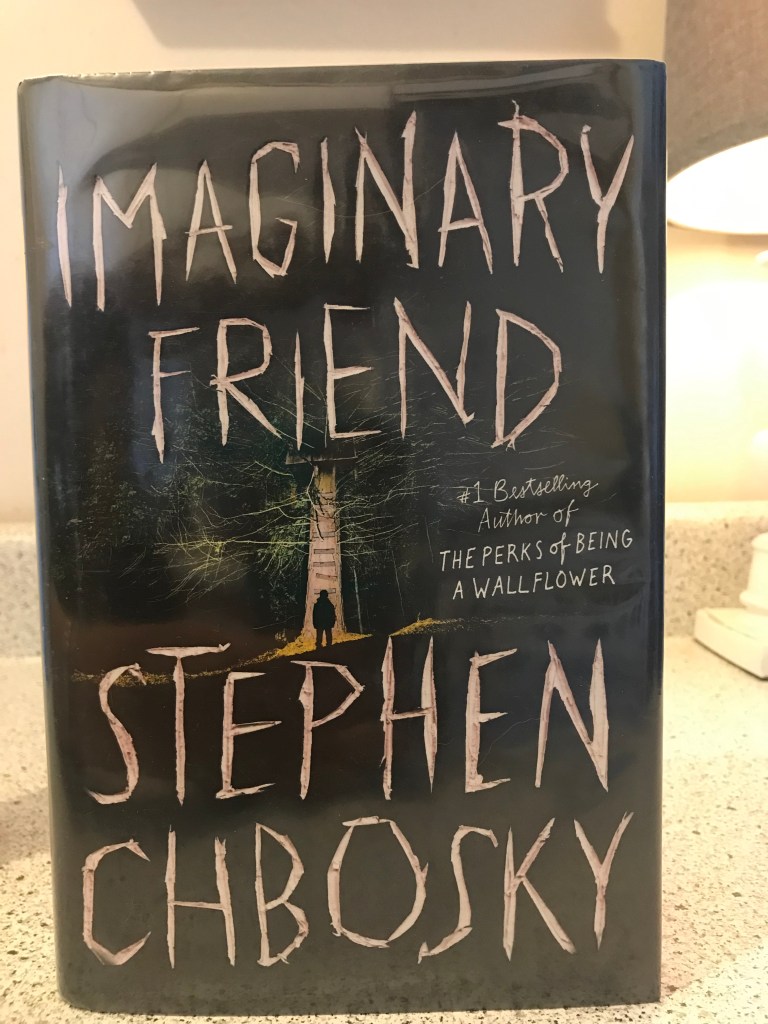
Imaginary Friend

2/5 plastic bags

The fight between good and evil, light and dark, and angels and demons is a universal tale and has served as the foundation for millions of stories. It is this struggle that serves as the primary conflict in Imaginary Friend by Stephen Chbosky.

Imaginary Friend tells the story of 7-year-old Christopher, a boy whose mother moves him to Pennsylvania to escape her abusive partner. Christopher struggles with school, but he’s a sweet kid. He disappears into a forest and vanishes for six days. When he comes out, he suddenly aces all of his tests, and he just knows things about the people around him. And the mysterious, possibly imaginary, nice man who helped him in the forest is nowhere to be found.

The nice man stays in touch with Christopher. And to defeat a strong, powerful, evil force, Christopher has to build a tree house in the middle of the forest in which he disappeared, otherwise terrible things will happen to everyone in town. The tree house is a portal to an imaginary world, which looks like the regular world, but for his own safety, Christopher can’t go there at night and can’t go there without the nice man.

The beginning of this book, while a bit slow paced, tells a compelling story. One of the most complex and interesting characters is Ambrose, an older man who is grappling with guilt over his role in the disappearance of his little brother, nearly 50 years ago. It would’ve been really interesting to focus more on Ambrose and possibly even tell the story from his point of view.

One of the biggest challenges in reading Imaginary Friend is the writing style. In the last third of the book, big chunks of dialog and some exposition iS wRitteN likE thiS, which is incredibly distracting and makes me think of this SpongeBob meme. (Also, people don’t speak in capital letters, unless they’re being used to emphasize pronunciation.) I initially thought maybe this was some kind of secret message, but then I read about 6 e’s in a row and realized it was just a creative choice.

Another challenge with this book is the lack of subtlety. For example, the number 217 comes up a lot (possibly in homage to my favorite book, The Shining). I mean it comes up a lot. Trust the reader! We are smart, and subtlety is appreciated! In fact, references are more meaningful when it takes a while for them to sink in. Furthermore, it’s bold to reference one of the greatest horror novels of all time so much. It distracted me from Imaginary Friend and just made me wish I were reading The Shining instead. (They’re approximately the same length. If you have time to read ~700 pages of a book, pick up The Shining.)

Mild spoiler alert: This book did not need to be nearly as long as it was, and all of the buildup was not worth it. If you have trouble with dairy, take a Lactaid before reading this, because the ending is cheesy. Forgiveness is effortless, and generational trauma ends in just one night. Imaginary Friend lacks the depth and nuanced understanding of some of the topics addressed in the book, such as domestic violence and child abuse.

And as nice as it can be to go into a book with no expectations or no ideas of what’s going to happen, it’s important to know the book’s genre and for publishers to market their books accordingly. Imaginary Friend should have been upfront about the overall Biblical theme. Readers should know what they’re getting into before picking up a 700-page novel. And as with The Shining allusions, the Biblical allusions are not subtle. That said, I’m not even sure a Christian audience would love Imaginary Friend, as there’s a bunch of swearing and some content that may be offensive to people who want to read Christian horror. (Side note: Is Christian horror a thing? I think it absolutely should be.)

Imaginary Friend touched on complex and difficult topics and had potential to be a classic story of good vs. evil and if those forces are as oppositional as we think, but the lack of nuance and jarring writing style limited its potential.

If you are looking for an interesting story that blurs the line between good and evil, check out The Hunger.

2020 Horror Movie Marathon

Here is official 2020 Haunting of Lit House Halloween Movie Marathon! These films are a mix of silly, scary, funny, and heartwarming. Unfortunately, some of them were removed from streaming services in the last few months, but I’ve listed if they can be streamed on one of the big streaming platforms. Make a big batch of popcorn, get comfy, and enjoy…if you dare…

  • The Autopsy of Jane Doe (Netflix): This film is the story of a father-son autopsy team and the autopsy they do on an unidentified woman. As the autopsy gets underway, strange things start happening. Warning: This is a gory movie. But if you can get past how gross autopsies are, The Autopsy of Jane Doe will keep you in suspense and wondering what happened to Jane Doe and who she really is.
  • Practical Magic (Hulu): Nicole Kidman and Sandra Bullock star in this truly adorable movie. They play witch sisters who have been cursed to never find true love, and their status as witches has made them the topic of gossip in their small town. After things turn dark for Kidman’s character, magic may be the only thing to save the sisters. Practical Magic is not particularly scary and jumps from being cute and lighthearted to dark and weird.
  • Candyman: Candyman starts out as your typical slasher film but becomes something much more complex. What if the demons from urban legends are real? What if victims become the enemy in public perception? Candyman is a moving, unexpected film exploring the monsters who haunt our nightmares. And it takes place in Chicago!
  • Basket Case: This is easily the silliest horror film I’ve ever seen. A man and his basket/brother (yes, you read that correctly) want revenge for an old sin. That’s all I’ll say. Just go watch this, and bring your sense of humor.
  • The Killing of a Sacred Deer (Netflix): Here’s the second Nicole Kidman movie in this movie marathon. Kidman’s on-screen husband becomes friends with a teenage boy, who he introduces to his family. The family becomes very ill, seemingly inexplicably. What sinister connection does this seemingly random boy have to the family? While this film isn’t the most earth-shattering horror film, the acting and dialogue are incredibly unsettling.
  • Hush (Netflix): Hush is a slasher film that tells the story of a deaf woman who lives by herself in the woods. What could go wrong? The beginning of this film (about the first 30 minutes) is disturbing because there’s no music. It’s just the protagonist moving around her house and mundane sounds of her doing chores. But of course, we see the killer lurking outside her house, creating incredibly stressful dramatic irony. The rest of the film is your average slasher movie, but the first 30 minutes make the movie worthwhile.
  • Alien (Hulu): A ruthless and vicious alien appears on a spaceship and attempts to kill the astronauts onboard. Alien is the best outer space horror movie against which all other space horror should be judged. Sigourney Weaver steals the show, and there’s a cat!
  • Elvira Mistress of the Dark (Hulu): Elvira Mistress of the Dark is not scary, but it stars my horror role model: Elvira! This uproarious comedy tells the story of a horror host who moves to a small conservative town and does not fit in. Cassandra Peterson (Elvira) is comedy gold, and her witty one-liners from this film have stood the test of time.
  • The Witch: Robert Eggers’ impressive directorial debut, The Witch tells the story of a New England puritanical family in the 1630s. The baby of the family is kidnapped, and it’s suspected that a witch stole the baby. More and more tragedies befall the family, and the ending of this film is beautiful and shocking and cements The Witch as one of the best horror films of this decade.
  • Night of the Living Dead (Amazon Prime): Night of the Living Dead is the quintessential zombie film and set the precedent for the zombie shows and movies that followed it.
  • Halloween: If Night of the Living Dead is the quintessential zombie film, Halloween is the quintessential slasher film. Its perfection comes from its simplicity. The killer is just a guy with a knife, and they don’t try too hard to explain him. John Carpenter’s simple but brilliant score sets the stage for the massacre that befalls Haddonfield, Illinois. And the 2018 sequel is surprisingly good. (Not as good as the original, but still quite enjoyable.)

What are your favorite Halloween movies?

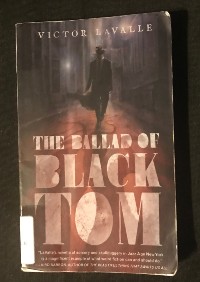
The Ballad of Black Tom

Rating: 4.5/5 guitars

The Ballad of Black Tom by Victor LaValle is an amazing and poignant novella, telling the story of Charles Thomas Tester, a young Black man in Harlem. He works hard to provide for himself and his dad, and a routine job to deliver an odd book to a woman Flushing Meadows starts the adventure of a lifetime. Tom plays guitar and sings (pretty poorly), and he draws the attention of a man named Robert Suydam who wants Tom to play for a party he’s having. Before he knows it, Tom is drawn deep into the world of magic and the occult

This novella is based on the H. P. Lovecraft short story “The Horror at Red Hook.” (Disclaimer: I haven’t read Lovecraft because of the racism. I get that a lot of modern horror authors draw from his body of work, but I’d rather spend my limited time reading books by BIPOC authors and just skimming Lovecraft’s Wikipedia pages.) It is told through the perspective of a Black man in the 1920s and the struggles Tom faces as a result of racism and police brutality. As he did in The Devil in Silver, LaValle discusses social issues in a horror setting. Readers see the police actively harm Tom and explore the ramifications of structural racism. And what’s especially haunting is that the horrors Tom experiences in the 1920s are the many of the same horrors Black people in America face today. LaValle is a master at telling very real human stories in a scary, supernatrual context, and he illustrates that real life may be more disturbing than the creepy tales told around campfires.

The Ballad of Black Tom is a truly phenomenal novella, and anyone who likes Lovecraft would love this piece. Shorter stories sometimes struggle to sufficiently develop characters, but LaValle is such a skilled writer that readers get to know Tom quickly. It absolutely has its moments of pure, creepy, terror, but it might also break your heart.

The Hunger

Rating: 4.5/5 broken wagon wheels

Alma Katsu’s The Hunger is a horrifying retelling of the tragic events surrounding the Donner Party. (If you don’t know about the Donner Party, don’t Google it before reading The Hunger, but definitely read up on it. It’s tragic and heartbreaking.) In The Hunger, a group called the Donner Party goes West in search of new opportunities and escape from their pasts, but the trip there is grueling and taxing.

There’s definitely something evil following the Donner Party, but the party doesn’t know what it is. Is it someone evil who’s part of the group? Are the mysterious pasts of the travelers catching up with them? Are they being followed by wolves? Whatever it is, it’s getting closer, and the group is becoming smaller and smaller, and each passing day reduces their food supply and brings them closer to what seems like unavoidable death.

The Hunger is, without a doubt, full of horror. Katsu knows how to build suspense, and when describing terrifying events, she brilliantly paints a vivid picture for readers, but she does so with a respectful sensitivity.

On the note of sensitivity, this book deals with indigenous peoples and many of the racist stereotypes against them, especially those held by early settlers. (You may remember that I called a reliance on these tropes boring and tired in a previous review.) But Katsu approaches this topic with kindness and care. In fact, her acknowledgements state that she didn’t want to glaze over the harmful views of native peoples but also didn’t want to perpetuate those stereotypes. It’s this sensitivity and awareness that sets Katsu’s work apart from others that rely on this trope just for funsies.

The Hunger touches on complex themes like moral relativity and the extents people will go to just to survive. Do the notions of good that apply during prosperity also apply during a time of starvation and death? Do social norms need to be upheld if it’s a matter of life and death? What are your limits when it comes to keeping yourself and your family alive?

In addition to those questions, The Hunger questions the notion of good or evil. The Hunger is told through the perspective of different characters, so readers get everyone’s backstory. A character we are lead to believe is evil has a complex background, so does that excuse his actions? What if someone does evil things for a good reason? Is that person good or evil? (Or are dichotomies like good and evil silly oversimplifications?)

Classifying The Hunger a horror novel does it a disservice; it’s so much more. It beautifully tells the stories of the variety of feelings humans have, from hunger to betrayal to sadness to love. It forces readers to think of good, evil, survival, and love. It reminds us that though some parts of life are horrific, other parts are full of beauty, and you can’t have one without the other.