The Best Books of 2023

It feels like every year gets better and better for literature, and 2023 was no exception! The following are (in no particular order) the best books I read in 2023. Some have been out for ages, while others just came out, and not all of them are horror.

The Artist’s Way: A Spiritual Path to Higher Creativity

To say this book changed my life would be an understatement. The Artist’s Way by Julia Cameron helps you rehabilitate your inner artist. This is a 12-week program (though it took me way longer than 12 weeks to complete it), and each week has a different focus. There are several recommended tasks each week, and I’d suggest doing as many as you can. The program requires a lot out of you (a weekly solo artist date and approximately 30 minutes of journaling every morning), but the payoff is incredible. Without it, I definitely wouldn’t have made as many cool things as I did. (I learned bookbinding this year and have made about a dozen or so journals for friends and family, and I’ve gotten back into sewing my own clothes. See the end of this blog post for another big artistic thing I did.)
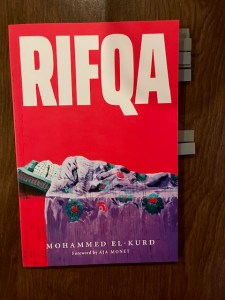
Rifqa

Rifqa is a collection of poems by Palestinian poet Mohammed El-Kurd. Rifqa explores horrors of occupation and settler colonialism. I cannot recommend this poetry collection enough!

The Book of Form and Emptiness

The Book of Form and Emptiness by Ruth Ozeki follows Benny, a teenager who, after the death of his father, begins to hear objects speak. It explores the relationship we have to our stuff, and the nature of stuff. 

In one particularly heartbreaking moment, Benny can’t concentrate in school because a bird flew into a glass window. Benny hears the window crying and screaming, feeling guilty for killing the bird. The window laments that it liked watching the bird, and back when the glass was just sand, it liked how bird claws felt on it. If that doesn’t break your heart, I don’t know what will. It also looks at how a lot of us have a story in us, if only we’re willing to shut up for long enough and listen to the world speaking to us.

Misery

Reading Misery at a time when I’ve been focusing more on writing made it 1000% scarier and more satisfying. You know the plot: A writer is kidnapped by his “number one fan,” and he has to write to appease her or else… (A full review coming soon!)

Misery made the cut of best books because the idea that the protagonist had to write or he’d die felt kind of relatable as someone who’s really found a lot of joy in writing this year. Not that anyone will kill me if I don’t write, but my soul feels alive when I’m writing. I highly recommend this for anyone who considers themselves a creative person.

Nightmare Fuel: The Science of Horror Films

Nightmare Fuel by Nina Nesseth is a fascinating look into what makes horror movies scary and why some of us seem to gravitate toward them more. This book backs up its theories with scientific studies about what happens to the human body during certain horror movie tropes.

My favorite fun fact from the book: Tritones (the dissonance you often hear in horror movie scores) scientifically do something to our brain. A study hooked up people who are tone deaf and people who are not to a machine and played tritones. The people who aren’t tone deaf had parts of their brain associated with fear light up, while people who are tone deaf didn’t have the same brain response. Our brains, for whatever reason, know that tritones mean something bad is happening!
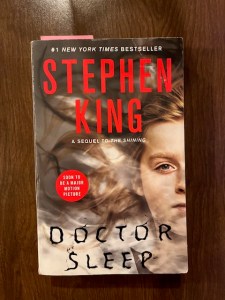
Doctor Sleep

Doctor Sleep is the sequel to one of my favorite books ever, The Shining. I’m going to post a full review of it soon, but suffice it to say I loved it. It isn’t as perfect as The Shining, but it is incredible.

How to Be Perfect: The Correct Answer to Every Moral Question

How to Be Perfect by Michael Schur is a modern-day exploration of philosophy. Schur wrote this after researching philosophy for the show The Good Place. Schur’s comedic genius made How to be Perfect the most entertaining philosophy book I’ve ever read. He’ll help you analyze questions like “Do I have to tell my friend her new sweater is ugly?” and “Do I have to put my cart back in the cart corral?” from the perspective of various philosophies.

Stiff: The Curious Lives of Human Cadavers

Stiff by Mary Roach examines the scientific use of cadavers and the vital role they play in science and safety. We owe so much to the people who’ve donated their bodies to science and helped make a healthier and safer world. Roach writes in a very accessible and informative way, even though she’s often writing about complex scientific topics.

Fun (did I say fun? I meant horrifying) fact from this book: Bodies donated to science have been used to develop more lethal bombs and bullets. 
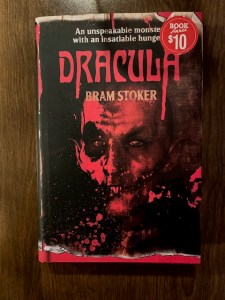
Dracula

Dracula by Bram Stoker is a phenomenal book that was so ahead of its time. We basically all know what happens, given the ubiquity of vampires in pop culture, but it absolutely holds up. 

Final Note

I apologize for not posting much last year, but I’ve been busy writing my own original horror pieces! I completed National Novel Writing Month (NaNoWriMo) and am pumped to get into revision mode. And I have an exciting announcement that I’ll share in a month or so. Stay tuned!

I hope you had a great year, and best wishes for a happy and healthy 2024!
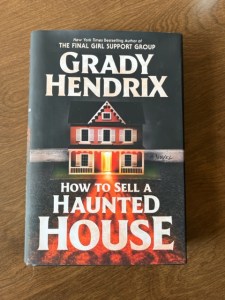
How to Sell a Haunted House

Rating: 4/5

In How to Sell a Haunted House by Grady Hendrix, we meet Louise, a single mother living in California, far away from her parents and brother. When her parents pass away, Louise flies home to Charleston to be with family and deal with the estate. Louise immediately gets a bad vibe when she sets foot into her parents’ house. Something seems off, and the plethora of puppets and dolls in the house are only part of the problem.

Louise has a contentious relationship with her brother, Mark. They get into a fight in front of the junk removal guy who Mark hired to clean up their parents’ house, and it becomes clear that there’s a reason Louise wanted to go to the other side of the country to get away from him.

How to Sell a Haunted House is a phenomenally gory, compelling story. It initially starts out a bit slow, but it picks up after the first few dozen pages. Hendrix is an expert at creating complex characters. (Hendrix does a great job of writing women. That may sound like a weird compliment, but he writes women as humans.) We learn that Louise may have some demons and secrets in her past, and perhaps Mark isn’t a total screw up.

This book deals with family secrets and repression. Louise’s extended family refuses to talk about certain family trauma, and without knowing about it, there is no way Louise can battle whatever’s gripping the house. This book illustrates that pushing down the bad feelings doesn’t get rid of them; they just manifest in other more painful and dangerous ways.

There are some incredibly gruesome, visceral moments in this book. I haven’t read all of Hendrix’s books, but this is definitely the goriest work of his that I’ve read. But it isn’t gratuitous; it all furthers the plot, even the really gross life-changing thing that happens. (Believe me, you’ll know what I’m talking about when you read this.)

The title initially felt misleading to me, but it eventually makes sense. If you’re expecting something like Mexican Gothic or The Haunting of Hill House, this may not be exactly what you want. But if you’re looking for a captivating story about life, death, and secrets, How to Sell a Haunted House is a must-read book. Fans of Hendrix’s other novels will enjoy this most recent work.

Don’t Fear the Reaper

Rating: 3.5/5 

Note: Do not read this review if you haven’t read My Heart is a Chainsaw. There will be spoilers. 

Don’t Fear the Reaper by Stephen Graham Jones is the sequel to My Heart Is a Chainsaw. It picks up a few years after the eventful Fourth of July that shook Proofrock. Readers get to follow Jade Daniels as she tackles a new monster: a serial killer named Dark Mill South.

My Heart Is a Chainsaw was remarkable because it had so much heart. Jones explores Jade’s life, her trauma, and how it shaped her worldview. Throughout the book, readers have a raw and up-close look at how Jade managed to deal with horrors she’d experienced. Unfortunately, Don’t Fear the Reaper does not have the same heart as its predecessor.

Part of this is because the perspective shifts throughout the novel. By the time readers start to like a character, that person is killed off. (Don’t be surprised by that…it’s a slasher!) And because of the numerous perspective shifts, it is hard to get into a character’s psyche. It also is difficult to root for characters when we don’t get to spend much time with them.

Final girls are powerful because we can see their mistakes and their near misses. We get a taste of their raw desire to live and ability to fight. But when the story shifts away from the final girl for significant amounts of time, we lose the joy and investment in her.

That said, the parts of the book that focused on Jade were fantastic. In addition to fighting Dark Mill South, Jade is also fighting herself. (In fact, she’d like to be called Jennifer now, not Jade.) But she has to grapple with the fact that Jennifer is Jade, and the ugly parts of her life ultimately led her to become who she is now. It would have been great to have more of the book focus on the battle of Jade vs. herself.

The friendship between Jade and Leetha Mondragon is one of the more compelling and heartwarming aspects of this story. In My Heart Is a Chainsaw, we see the beginnings of friendship between the popular girl and the outcast. This book furthers their friendship, and we see Jade come to terms with the fact that she can’t survive without some help.

It would be worthwhile to reread My Heart Is a Chainsaw before picking up this book. I had forgotten some parts of book one of this trilogy. (Yes, there’s a third one coming!) That said, Jones does a great job of giving context so you won’t be totally lost. I would not recommend reading this if you haven’t read the first book in the series.

Even though I preferred the first book in this series more than Don’t Fear the Reaper, Jade Daniels is still my final girl. 

Audition

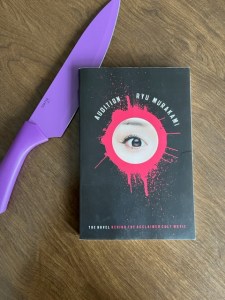
An image of the book Audition next to a large purple kitchen knife.

Rating: 2.5/5 Films That Never Get Made

Couples meet in a variety of ways: at work, through mutual friends, and on dating apps. But the most successful way to meet your soulmate is to set up auditions for a film that will never get made and pick the hottest applicant. (What, like your love life is perfect?) That last meet cute is what happens in Audition by Ryu Murakami.

Aoyama, a widower, is encouraged by his son to find a wife. Aoyama’s filmmaker friend suggests hosting auditions for a film that will never be made. Aoyama can’t get one applicant, Yamasaki Asami, out of his mind. On paper she is perfect, and she’s completely captivating in person.

But she has a mysterious past. Some things she’s said about her life turn out to be untrue, but Aoyama’s rose-colored glasses prevent him from seeing the red flags, and it may be too late.

Audition is an interesting story, but it’s lacking backstory. We eventually learn a bit more about Yamasaki’s past, but we don’t learn about why she does what she does. (We don’t need a full biography, but something simple like how Halloween tells us about Michael Myers would’ve been great.)

It is a short book, but not much happens for the first ¾ of the book. The end picks up much more and is full of the gory scenes we all love, but it is a very slow burn. Additionally, the characters don’t have much depth. We don’t get to see much about the personalities of Aoyama, his son, or Yamasaki. It is a short book, but readers aren’t able to classify any characters in any meaningful way, e.g., Aoyama is lazy or Yamasaki would do anything for a good corndog.

Because of this lack of character depth, there was no one to root for, making it hard to get invested in the story. Aoyama came up with a weird way to find a wife and seemed to mostly be after Yamasaki’s looks, so I didn’t really care if anything bad happened to him. And Yamasaki remained a strange and mysterious person, so it’s hard to know why she does the strange things she does. (That said, I usually root for women, so I guess I’m Team Yamasaki.)

Audition was originally published in Japanese, and I read an English translation. Perhaps it’s the translation, but much of the foreshadowing felt clunky. It became pretty clear early on what Yamasaki might be up to, and it was also obvious that certain props would be crucial to the plot.

While the concept of this story is interesting and the ending of the book is violent and gross in all the right ways, the characters fell flat and the exposition dragged. But if you’re looking for a quick read that will gross you out, check out Audition. It won’t make you view life from a new perspective or change the way you think, but it might scratch that itch for gore.

House of Leaves

Rating: 5/5 Hallways

Communication theorist Marshall McLuhan said, “the medium is the message,” i.e., the format of a message may be as important as the content of said message. No book exemplifies this concept more than House of Leaves by Mark Z. Danielewski. Despite the popularity of this book, it has yet to be made into an eBook; given that its text is sometimes backwards, upside down, and sideways, House of Leaves can only be a physical book. (And there’s absolutely no possible way it could be adapted for film.)

House of Leaves is a book put together by a young man named Johnny, who is compiling writing by a recently deceased man named Zampanó. Zampanó’s writing about a film called The Navidson Record, which doesn’t exist in the real world or in the world of House of LeavesThe Navidson Record follows a family who moves into a house that seemingly doesn’t make sense: Its interior dimensions are larger than its exterior dimensions. The house shifts unpredictably and dangerously, leaving the family and the home’s inhabitants in peril.

This plot is deliberately convoluted and mazelike. The twists, turns, and immersive nature of the book mirror the labyrinth of the house. At times, Johnny will interrupt Zampanó’s writing with a several-page-long footnote about something he’s going through in his personal life. Readers see Johnny’s mental health deteriorate as the book progresses. He becomes so immersed in Zampanó’s writing and The Navidson Record that his life falls apart. The way he gets sucked into Zampanó’s writing is the way readers will get sucked into Johnny’s writing. Likewise, readers will get sucked into The Navidson Record and all the criticism and literature around it, and they’ll forget it isn’t even a real film in the world of House of Leaves. Danielewski brilliantly has readers mirror the plot of the book as they read House of Leaves

House of Leaves is a captivating book full of twists and turns. (Literally. At times, you’ll have to hold the book sideways or upside down to read it.) It reads like a work of nonfiction as it has numerous endnotes, exhibits, and appendices. While parts of it may be boring, with lengthy asides about architecture, Morse code, and labyrinths throughout history, stick with it; there is a lot of information thrown out there, but it all has a purpose and will eventually pay off.

House of Leaves is one-of-a-kind and exceptionally creative. It forces readers to ask why we have to read books in a certain orientation and if they have to be read in the same order in which they are paginated. (Questions that I’ve honestly never asked.) It embodies what can happen if artists choose not to allow a medium to hold them back. For that alone, it’s a 5/5 for originality. But the plot and symbolism of the house (Is the house a representation of the self? Does the house represent introspection? Does the house bring out a person’s true nature? Is there a punishment for those who try to “conquer” the house?) make it a phenomenal read as well. Anyone interested in reading something experimental or out there must read House of Leaves

The Devil Takes You Home

A photo of the book "The Devil Takes You Home"

Rating: 5/5 Bolt Cutters

Parents may say they’d kill for their kids, but would they actually do it? If you could eventually have the perfect family but be haunted by the memory of watching someone’s last breath leave their body, could you cope? Do the ends justify the means?

The Devil Takes You Home by Gabino Iglesias is a tragic and compelling story about a man’s quest to do everything he can to preserve his marriage. When Mario’s family experiences a medical scare, money becomes tight. Mario’s flaky friend Brian tells him about a job that can make him a lot of money. Mario takes a job as a hitman and surprises himself with what he’s capable of doing, just as tragedy strikes his family. Then the promise of one big (but grueling) job proves to be too tempting for Mario to ignore. But that job puts Mario face to face with death and the extent of human depravity. When all is said and done, will Mario survive? And if he makes it, can he live with the pain he’s caused and the cruelty he’s seen?

The Devil Takes You Home is a heartbreaking story about what someone will do when driven by grief and love. Mario comes across as a good guy who loves his wife and daughter, but he’s driven by emotions that threaten to suffocate him and change who he fundamentally is as a person.

Books like this are exactly why so many people love horror. Iglesias has crafted a story that is equal parts disturbing and heartbreaking. It’s gory, barf inducing, and twisted, and I mean that as the highest compliment. Iglesias masterfully uses horror as the vehicle to tell a very human story about the lengths people will go to for family. The Devil Takes You Home is full of action and surprises, and you won’t be able to put this book down. This book is devastating and will make readers feel all the feels.

If you like other heartfelt horror like The HungerThe Shining, or The Year of the Witching, check out The Devil Takes You Home

The Fervor

Rating: 4/5 Spiders

If you were being held captive and a scary, violent illness infected everyone around you, what would you do? Would you think it’s bad luck? Is it some kind of biological warfare? Or is it a demon’s wrath?

In Alma Katsu’s The Fervor, Meiko and her daughter, Aiko, are in an internment camp where something is going around that makes people sick and violent and eventually kills them. It soon becomes clear that this is no ordinary sickness; something sinister is happening, and Meiko and Aiko may be the only people who can figure out what it is and stop it. 

The Fervor is a haunting and beautiful story about forgiveness, racism, and pain. Katsu is an expert at writing about real historical events with tact and compassion. She doesn’t sensationalize or downplay the horrors of the camps. She captures the real terrors of the internment camps and imagines horrors caused by the fictional mysterious illness spread through the camp.

The Fervor explores themes of redemption, family, and forgiveness. Throughout the book, Archie Mitchell, a friend of Meiko’s family, grapples with his betrayal of her family and struggles to redeem himself. The Fervor explores what it takes to earn forgiveness and how to forgive yourself.

The most compelling (but most devastating) element of the book is the way Katsu writes about racism against Asian Americans. The parallels to the hate crimes and violence many Asian Americans face, especially in light of COVID-19, are upsetting and show how this country really hasn’t come that far. You have to read The Fervor’s Afterword; it explores some of the violent attacks Asians have experienced in the United States, and she challenges the notion that atrocities that happen in other countries “can’t happen here.”

The Fervor is a must-read book for history fans. If you liked Alma Katsu’s other books, you’ll love The Fervor

Yours Cruelly, Elvira

Rating: 5/5 Unpleasant Dreams

Someone asked me if money were no object, what would my career be, to which my response was, “I’d be the Elvira of horror novels.” (I also said I’d like to be a taste tester for Hot Cheetos.) She’s witty, creepy, and a total fox. Given how much I love Elvira, it’s no surprise that I got my claws on her autobiography as soon as possible. So although this book isn’t the horror novel/stories I typically review, its review absolutely has a home here.

Yours Cruelly, Elvira by Cassandra Peterson is all about her life, beginning with a childhood accident that could have been fatal. Cassandra is a remarkable person: She’s bold and fearless. She did more interesting stuff before her 30th birthday than most people do in their entire lives. She had to be talked into auditioning for Elvira, but she did it and obviously knocked it out of the park. A lot of the opportunities she’s had are because she was open to new experiences and opportunities and was in the right place at the right time.

I don’t want to give away any of her fun stories (but comment if you were as blown away as I was when she revealed Bobby’s last name), so here is what I took away from her autobiography: Our lives are ultimately about people and human connection. Stuff, jobs, and homes will come and go, but relationships outlast all of those things. Cassandra found community and a sense of belonging with friends. When things didn’t work out, she had people who could support her and pick her back up, and that helped her take risks that brought her closer to achieving her dreams. 

After reading Yours Cruelly, I more actively cultivated my friendships and prioritized meeting new people and putting myself out there. I’ve tried to be more open to new friendships, and I’ve made some fantastic new friends because of this mindset. I’ve also seen the importance of friendships that motivate and inspire me to be my best, most creative self.

Another key takeaway from Yours Cruelly is to be more open to new things. Cassandra started off as a go-go dancer in Vegas, but she also traveled with a band in Europe and eventually landed her hosting gig. Had she refused to try new things and branch out, we may not have Elvira! (Or at least not the Elvira we know and love.) So try new things! Embrace the challenge of learning a new skill! Get comfortable with being uncomfortable!

Thank you, Cassandra, for being such an inspiration. This blog and hobby of mine wouldn’t exist without you.

Night Shoot

Rating: 4/5 Student Filmmakers

Night Shoot by David Sodergren follows a group of student filmmakers who have the opportunity to shoot their movie in Crawford Manor, an old home owned by one of the students’ uncles. The uncle is clear that they need to leave by a certain time so he can lock up the home, and he cannot allow them to stay longer. But when the lead actress quits, it’s clear that the limited time they can be in Crawford Manor will not suffice, so they have the brilliant idea of breaking into it after the uncle locks up. What could possibly go wrong?

Night Shoot is such a fun slasher story. Any fans of slasher films will enjoy this book; it pokes a lot of fun at the sexism often seen in the genre. Sodergren leverages a lot of slasher tropes to write a vivid and interesting story, but there are loads of twists and turns along the way, and it’s anything but predictable.

The pacing of Night Shoot is perfect. Readers get action and scares from the beginning, and the creepy tone of the novel is set immediately. And through it is an action-filled book, the characters are fully formed and Sodergren does a great job of giving backstory and character development in a way that keeps the plot moving forward.

Anyone who likes slasher stories needs to read Night Shoot.

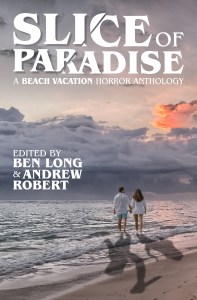
Slice of Paradise: A Beach Vacation Horror Anthology

Rating: 4/5 Beaches

The blue water, warm breeze, and squishy sand of a beach make it the perfect spot to relax and let your guard down. But what if someone or something on the beach is out to get you? Slice of Paradise explores the horrors that can happen on a beach vacation. 

This anthology, edited by Ben Long and Andrew Robert, contains 17 short stories about the creepy things that lurk under palm trees and below the waves.

The standout story from this anthology is “Astorgos” by Ashlei Johnson. In it, a couple is on what should be an idyllic trip to the Amalfi Coast, but everything goes wrong when a meteor shower strikes. Johnson’s writing creates a visceral reaction and expertly builds suspense and fear. She somehow manages to put the reader alongside the characters who are trying to figure out what’s happening (and how to stay alive). Something about the way it’s written felt realistic, even though the events in the story were pretty fantastical, kind of like how a scary dream feels real even though something ridiculous is happening. Anyone who has talked to me in the last week has probably heard me rave about “Astorgos.” (I should mention that after finishing this story, I had to stop reading for the night and watch “Frasier” to decompress.) I loved everything about this story.

“Misery Guts” by Craig Wallwork is a fun, disgusting story (and I say that as the highest compliment). What seems like a simple case of food poisoning is something much worse and grosser. This is an entertaining revenge story, but it’s only for those with strong stomachs. 

“The Fons Juventutis” by Kay Hanifen tells the story of a beach resort’s housekeeper who finds a dead body and the aftermath of that discovery. This story stood out because it told a story from the perspective of a local rather than a tourist, and it addresses a lot of complex themes, like fate and free will. “The Fons Juventutis” also explores the relationships between characters, and that makes it more than just a scary story.

“Honeymoon” by Simon J. Plant is a trippy story about a couple honeymooning at a resort where something feels off. The immaculate pacing and storytelling in “Honeymoon” made it impossible to put down, and after finishing it, readers will probably feel uneasy. (Again, I say that as the highest compliment.)

Overall, A Slice of Paradise is a fun anthology with memorable and unique stories. That said, a few stories had the trope of “the natives are sacrificing us to their vengeful god,” and I don’t like that trope. It bores me, and we can do better. Despite that criticism, this anthology has stories that I highly recommend. 

I have a beach trip planned soon, but I might need to rethink it…who knows what horrors await me.

Disclaimer: I received a complimentary ebook copy of Slice of Paradise for review. All opinions are my own and independent of receiving a free copy.