It feels like every year gets better and better for literature, and 2023 was no exception! The following are (in no particular order) the best books I read in 2023. Some have been out for ages, while others just came out, and not all of them are horror.
The Artist’s Way: A Spiritual Path to Higher Creativity
To say this book changed my life would be an understatement. The Artist’s Way by Julia Cameron helps you rehabilitate your inner artist. This is a 12-week program (though it took me way longer than 12 weeks to complete it), and each week has a different focus. There are several recommended tasks each week, and I’d suggest doing as many as you can. The program requires a lot out of you (a weekly solo artist date and approximately 30 minutes of journaling every morning), but the payoff is incredible. Without it, I definitely wouldn’t have made as many cool things as I did. (I learned bookbinding this year and have made about a dozen or so journals for friends and family, and I’ve gotten back into sewing my own clothes. See the end of this blog post for another big artistic thing I did.)
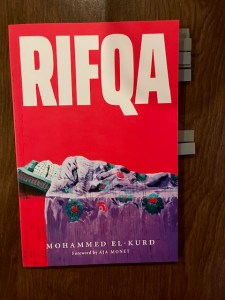
Rifqa
Rifqa is a collection of poems by Palestinian poet Mohammed El-Kurd. Rifqa explores horrors of occupation and settler colonialism. I cannot recommend this poetry collection enough!
The Book of Form and Emptiness
The Book of Form and Emptiness by Ruth Ozeki follows Benny, a teenager who, after the death of his father, begins to hear objects speak. It explores the relationship we have to our stuff, and the nature of stuff.
In one particularly heartbreaking moment, Benny can’t concentrate in school because a bird flew into a glass window. Benny hears the window crying and screaming, feeling guilty for killing the bird. The window laments that it liked watching the bird, and back when the glass was just sand, it liked how bird claws felt on it. If that doesn’t break your heart, I don’t know what will. It also looks at how a lot of us have a story in us, if only we’re willing to shut up for long enough and listen to the world speaking to us.
Misery
Reading Misery at a time when I’ve been focusing more on writing made it 1000% scarier and more satisfying. You know the plot: A writer is kidnapped by his “number one fan,” and he has to write to appease her or else… (A full review coming soon!)
Misery made the cut of best books because the idea that the protagonist had to write or he’d die felt kind of relatable as someone who’s really found a lot of joy in writing this year. Not that anyone will kill me if I don’t write, but my soul feels alive when I’m writing. I highly recommend this for anyone who considers themselves a creative person.
Nightmare Fuel: The Science of Horror Films
Nightmare Fuel by Nina Nesseth is a fascinating look into what makes horror movies scary and why some of us seem to gravitate toward them more. This book backs up its theories with scientific studies about what happens to the human body during certain horror movie tropes.
My favorite fun fact from the book: Tritones (the dissonance you often hear in horror movie scores) scientifically do something to our brain. A study hooked up people who are tone deaf and people who are not to a machine and played tritones. The people who aren’t tone deaf had parts of their brain associated with fear light up, while people who are tone deaf didn’t have the same brain response. Our brains, for whatever reason, know that tritones mean something bad is happening!
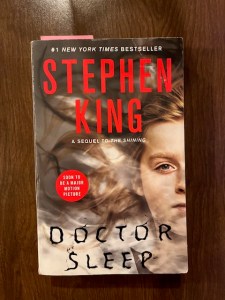
Doctor Sleep
Doctor Sleep is the sequel to one of my favorite books ever, The Shining. I’m going to post a full review of it soon, but suffice it to say I loved it. It isn’t as perfect as The Shining, but it is incredible.
How to Be Perfect: The Correct Answer to Every Moral Question
How to Be Perfect by Michael Schur is a modern-day exploration of philosophy. Schur wrote this after researching philosophy for the show The Good Place. Schur’s comedic genius made How to be Perfect the most entertaining philosophy book I’ve ever read. He’ll help you analyze questions like “Do I have to tell my friend her new sweater is ugly?” and “Do I have to put my cart back in the cart corral?” from the perspective of various philosophies.
Stiff: The Curious Lives of Human Cadavers
Stiff by Mary Roach examines the scientific use of cadavers and the vital role they play in science and safety. We owe so much to the people who’ve donated their bodies to science and helped make a healthier and safer world. Roach writes in a very accessible and informative way, even though she’s often writing about complex scientific topics.
Fun (did I say fun? I meant horrifying) fact from this book: Bodies donated to science have been used to develop more lethal bombs and bullets.
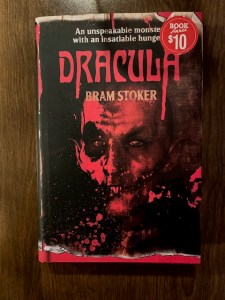
Dracula
Dracula by Bram Stoker is a phenomenal book that was so ahead of its time. We basically all know what happens, given the ubiquity of vampires in pop culture, but it absolutely holds up.
Final Note
I apologize for not posting much last year, but I’ve been busy writing my own original horror pieces! I completed National Novel Writing Month (NaNoWriMo) and am pumped to get into revision mode. And I have an exciting announcement that I’ll share in a month or so. Stay tuned!
I hope you had a great year, and best wishes for a happy and healthy 2024!





 The Haunting of Lit House