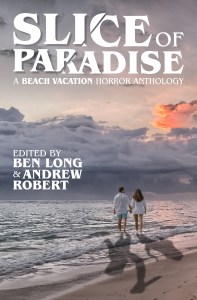
Slice of Paradise: A Beach Vacation Horror Anthology

Rating: 4/5 Beaches

The blue water, warm breeze, and squishy sand of a beach make it the perfect spot to relax and let your guard down. But what if someone or something on the beach is out to get you? Slice of Paradise explores the horrors that can happen on a beach vacation. 

This anthology, edited by Ben Long and Andrew Robert, contains 17 short stories about the creepy things that lurk under palm trees and below the waves.

The standout story from this anthology is “Astorgos” by Ashlei Johnson. In it, a couple is on what should be an idyllic trip to the Amalfi Coast, but everything goes wrong when a meteor shower strikes. Johnson’s writing creates a visceral reaction and expertly builds suspense and fear. She somehow manages to put the reader alongside the characters who are trying to figure out what’s happening (and how to stay alive). Something about the way it’s written felt realistic, even though the events in the story were pretty fantastical, kind of like how a scary dream feels real even though something ridiculous is happening. Anyone who has talked to me in the last week has probably heard me rave about “Astorgos.” (I should mention that after finishing this story, I had to stop reading for the night and watch “Frasier” to decompress.) I loved everything about this story.

“Misery Guts” by Craig Wallwork is a fun, disgusting story (and I say that as the highest compliment). What seems like a simple case of food poisoning is something much worse and grosser. This is an entertaining revenge story, but it’s only for those with strong stomachs. 

“The Fons Juventutis” by Kay Hanifen tells the story of a beach resort’s housekeeper who finds a dead body and the aftermath of that discovery. This story stood out because it told a story from the perspective of a local rather than a tourist, and it addresses a lot of complex themes, like fate and free will. “The Fons Juventutis” also explores the relationships between characters, and that makes it more than just a scary story.

“Honeymoon” by Simon J. Plant is a trippy story about a couple honeymooning at a resort where something feels off. The immaculate pacing and storytelling in “Honeymoon” made it impossible to put down, and after finishing it, readers will probably feel uneasy. (Again, I say that as the highest compliment.)

Overall, A Slice of Paradise is a fun anthology with memorable and unique stories. That said, a few stories had the trope of “the natives are sacrificing us to their vengeful god,” and I don’t like that trope. It bores me, and we can do better. Despite that criticism, this anthology has stories that I highly recommend. 

I have a beach trip planned soon, but I might need to rethink it…who knows what horrors await me.

Disclaimer: I received a complimentary ebook copy of Slice of Paradise for review. All opinions are my own and independent of receiving a free copy.
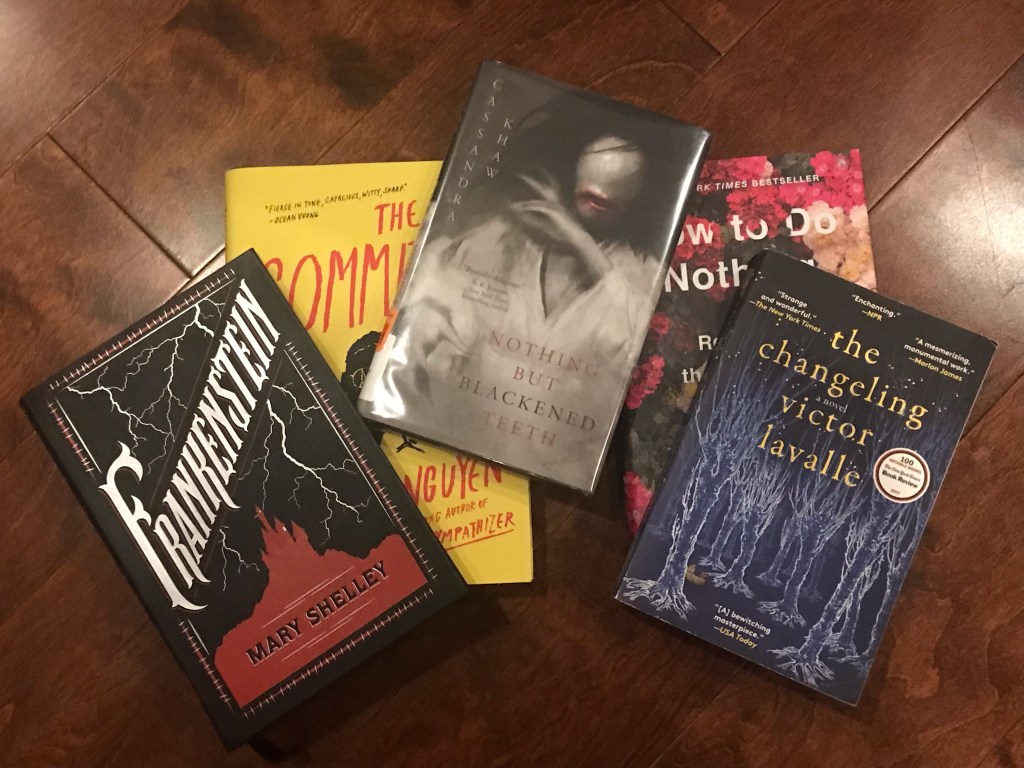
Haunting of Lit House’s Best Books of 2021

2021 was a fantastic year for horror novels. I read some amazing books this year (horror and other genres), and here are the best of them. These are listed in the order of when I read them (from most recent to least recent). I loved all of these and think you would too!

  1. The Wedding Date series by Jasmine Guillory—I haven’t read all of the books in this series, but I’m obsessed with the four I have read. They’re romance novels, and some of the minor characters in the first book become the main characters in subsequent books. It isn’t the most earth-shattering writing (a lot of people relaxing against others when touched), but these books are so entertaining and addicting. I highly recommend them if you’re looking to read something fun and engaging.
  2. Nothing But Blackened Teeth by Cassandra Khaw—There’s a house in Japan that, legend has it, was supposed to host a wedding, but the groom died on his way to the wedding, and the bride insisted on being buried alive in the house. Since that, a girl is buried alive in the house annually. A group of friends/frenemies goes there for a wedding. What could possibly go wrong? Though this is a short book, it’s one you’ll want to take your time reading. Khaw is such a clever writer that every word was carefully selected and every sentence is rich with vivid imagery. 
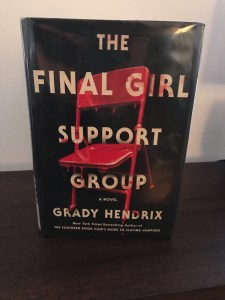
  3. Final Girl Support Group by Grady Hendrix—We love to root for final girls, the girls who beat the killer and survive to the end of the movie. But what happens when the movie ends? This novel explores what happens when a killer targets a final girl support group. You can find a full review here.
  4. On Writing: A Memoir of the Craft by Stephen King—If you’re new here, you should know I love Steven King’s writing. The Shining is one of my favorite books. I’ve started dabbling in writing my own original horror fiction, and I wanted to know how one of my writing role models did it. On Writing is a fantastic resource for anyone interested in writing and/or any fans of King. (It’s also hilarious.) 
  5. The White Tiger by Aravind Adiga—If you like revenge stories, The White Tiger is for you. It follows Balram, a poor man who works for an incredibly wealthy family. Adiga expertly juxtaposes how the rich often get richer while the poor stay poor. While I wouldn’t consider it horror, there is a slightly gory scene, so be aware if that’s not your thing.
  6. Frankenstein by Mary Shelley—I know I’m more than 200 years late, but I read Frankenstein for the first time this year and loved it. You know the plot of Frankenstein, but I loved it because it was heartbreaking and brought up so many ethical issues. Shelley was centuries ahead of her time.
  7. My Heart Is a Chainsaw by Stephen Graham Jones—If you’ve spoken to me since I finished reading this book, you’ve no doubt heard me talk about My Heart Is a Chainsaw. You can find a full review here. This book stirred something in my soul, and for that reason, it is tied for my favorite book I read this year.
  8. The Committed by Viet Thanh Nguyen—This is the sequel to The Sympathizer, which I loved. It follows what happened to the spy after The Sympathizer ends. As with its prequel, it explores the dual nature of the spy (and, more broadly, anyone straddling two or more cultures). The prose felt much more scattered than The Sympathizer, but it perfectly reflects the spy’s confusion about who he truly is. This is worth a read, but definitely read The Sympathizer first.
  9. On Earth We’re Briefly Gorgeous by Ocean Vuong—This book is probably the most beautiful book I read this year. Vuong’s prose is poetic. It’s a letter from a Vietnamese man to his mother who can’t read English. It explores the often-complex relationships immigrant parents have with their children as well as ideas of masculinity and race. 
  10. The Changeling by Victor LaValle—I’ve already talked about how much I love this book. It is tied with My Heart Is a Chainsaw for the best book I read this year. This book felt like hearing a folk tale you heard as a child but forgot. Something about it felt simultaneously new and familiar. (For the record, I’ve been obsessed with everything I’ve read by LaValle.)
  11. The Greatest Love Story Ever Told by Megan Mullally and Nick Offerman—Please listen to this audiobook, narrated by Mullally and Offerman. It’s, unsurprisingly, hilarious. But Mullally and Offerman also have a really sweet and inspiriting relationship. They’ve devoted their lives to being creative and creating art, and they support each other fiercely. (But they don’t seem like one of those codependent couples that can’t do anything without each other.) This book will inspire your creativity.
  12. The Sookie Stackhouse series by Charlaine Harris—I’ve read this series before, but I reread the first two books in it this year. I absolutely love this series. It’s a vampire/supernatural series that was the inspiration for the HBO show True Blood. It’s fun, lighthearted, and completely addicting. I highly recommend it for anyone who wanted Twilight to be good.
  13. From Here to Eternity: Traveling the World to Find the Good Death by Caitlin Doughty—Doughty is a mortician, known by many from her YouTube channel, Ask a Mortician. In this book, she explores death customs around the world. She’ll challenge you to question why our death norms are what they are and will push you to be more accepting of death customs that may initially seem off-putting. 
  14. How to Do Nothing: Resisting the Attention Economy by Jenny Odell—Honestly, a lot of this book is theoretical and it doesn’t give many practical strategies on changing the attention economy. That said, the introduction of this book is incredibly powerful. We’re so wired to always be doing something, and the attention economy, e.g., social media, prevents us from just being. Odell’s anti-capitalist perspective values doing nothing just for the sake of it, not as a way to combat burnout and a productivity aid. She effectively shows how mindfulness and resisting the attention economy can be a radical act. 
  15. Her Body and Other Parties: Stories by Carmen Maria Machado—This collection of short stories has so much range and variety. At times it’s tragic, and at times it’s comedic. It has an entire short story that’s Law & Order: SVU fan fiction. It’s beautifully written, and much of it will stick with you for long after you’ve read them.

The Final Girl Support Group

Rating: 4.5/5 Final Girls

“Dying isn’t the important thing. It’s nothing more than the punctuation mark on the end of your life. It’s everything that came before that matters. Punctuation marks, most people skip right over them. They don’t even have a sound.”

– Grady Hendrix, The Final Girl Support Group, p. 326

Final girls: They’re the heroes of horror movies who survive and stop the killer. But what happens to them after the credits roll?

The Final Girl Support Group by Grady Hendrix answers that question and explores the trauma final girls experience. It focuses on Lynette Tarkington, a member of a final girl support group, who lives her life in fear of being murdered. She takes ridiculously complicated routes to go places, she rarely leaves home, and her only real friend is a plant. But her way of living doesn’t seem so paranoid when someone in the support group misses a meeting. Lynette suspects someone is after her and the other members of the support group. Can her survival skills save the rest of the women in the group and herself, or will everyone think she’s paranoid?

The Final Girl Support Group is a fun, fast-paced story with a lot of heart. Hendrix gives backstory in a way that reveals a lot about Lynette but keeps the story action-filled and murder-ey. 

The relationships among women in this book are well written and essential to the plot. The exploration of these complex relationships is so nuanced and true to life. (And a lot of it passes the Bechdel test!) Hendrix doesn’t write perfect characters; they, like real humans, are flawed, make mistakes, and do dumb things. It’s this imperfection that makes the characters in The Final Girl Support Group so realistic.

The Final Girl Support Group is also a must-read because, though it is a slasher-type story, it isn’t about the killer; it’s about the victims and the people who fight back against the killer. It centers the victims and doesn’t glorify the killers. It’s full of compassion, forgiveness, and friendship.

Fans of horror movies, final girls, or Grady Hendrix need to read The Final Girl Support Group.

The Haunting of Lit House’s Official 2021 October Recommendations

Halloween 2021 is almost here! No matter what kind of horror you like, the following list has a recommendation to get you ready for Halloween:

  • I love slashers: If you like slasher movies/books, you have to read My Heart Is a Chainsaw by Stephen Graham Jones. It follows the story of a high school senior named Jade Daniels, who’s probably more obsessed with slasher movies than you. She’s convinced a slasher is terrorizing her town, but because of her encyclopedic knowledge of slashers, she knows how the slasher can be stopped. But will those in charge actually believe her? The previous post on this blog has a full review of My Heart Is a Chainsaw.
  • I want something creepy with heartThe Changeling by Victor LaValle is creepy, full of heart, and incredibly well written. It follows Apollo Kagawa’s journey into fatherhood. Soon after becoming parents, Apollo’s wife commits a terrible crime, and Apollo has to begin an exhausting search for his wife and son. The Changeling is a beautiful story about how far people will go to protect their families. LaValle’s writing style is incredibly immersive, and readers will feel like they’re joining Apollo on his journey. (Also, anything by Victor LaValle is going to have a lot of heart, so if this doesn’t seem like your jam, try anything else he’s written.)
  • I’m a big chicken. I want something Halloween adjacent that isn’t too scary: The Sookie Stackhouse series by Charlaine Harris is easily one of the best vampire series ever. The first book, Dead Until Dark, explores the ramifications of vampires “coming out of the coffin” and the havoc they wreak on a small town in Louisiana. Sookie, the main character who happens to be a telepath, finds herself enmeshed in vampire politics, which can have deadly consequences. This is a book about vampires, so it does have blood and murder, but it really isn’t horror. It’s more of a mystery with some romance thrown in. It’s the series that the show True Blood is based on. (And if you haven’t watched True Blood, you should. At least the first season.)
  • Trees are beautiful this time of year. I hate that. I want to be afraid of themThe Year of the Witching by Alexis Henderson tells the story of Immanuelle Moore, a young woman living in a puritanical town. Immanuelle finds herself venturing into the Darkwood, a forbidden forest near her town, where she finds a journal of her deceased mother. Naturally, terrible things begin to happen to the town after Immanuelle finds the journal. The Year of the Witching is the perfect feminist, witchy story for this time of year.
  • I like to watch horror movies through my fingers. I want a book that will make me do thatCoyote Songs by Gabino Iglesias has one of the creepiest scenes in a book I have ever read. I won’t give it away, but I audibly said “no, no, oh this can’t be good…no, no, no, no, OH S$!T” while reading it. Coyote Songs tells a few different stories, and each is incredibly well written and gets pretty creepy. Iglesias has the ability to give characters a thorough and in-depth backstory while progressing the plot. Coyote Songs is nearly impossible to put down, and Iglesias truly exemplifies showing, not telling.
  • I don’t know much about horror. I want a primer on horror fiction: Monster, She Wrote by Lisa Kröger and Melanie R. Anderson walks you through the women who shaped horror into the genre it is today. This book also contains information on different types of horror and is a must-read for anyone whose blood boils when people say only men write good horror. It’s one of the few books that will leave you with a longer to-be-read list when you finish it than when you began.
  • I’m interested in diversifying my reading. Anything on here by women or BIPOC? You’re in luck! Everything on this list to this point has been by a woman author and/or BIPOC author. Enjoy.
  • I want to get in the Halloween spirit, but I don’t have time to finish a book before Halloween: You’re probably already familiar with his work, but nothing gets you in the spooky spirit like Edgar Allan Poe. His poems are fairly short and will get you primed for Halloween. And his work is in the public domain, so no need to buy a new book or wait for the library to get it in stock! And if you hate reading but somehow stumbled onto this blog and made it this far, watch The Simpsons season 2 “Treehouse of Horror” episode. It doesn’t include the full text of “The Raven,” but it has James Earl Jones, and that’s a plus.
  • I don’t like scary things or Halloween. I’m reading this post to support you: Thank you for your support! It means the world to me. As a token of my appreciation, I’d like to recommend that you read Atomic Habits by James Clear. It’s a guide on how to take small steps daily to build habits that will change your life. Every day you take action, it’s like putting money in a bank where it is growing interest. And a little bit of something daily is better than doing a lot of that something occasionally. Proof Clear’s method works: I have spent most of my life wanting to exercise regularly, but I could never get the habit to stick. After applying the habit-building concepts detailed in Atomic Habits, I am coming up on one year of exercising at least 4 times per week. (Ok, I took a one-week break when I moved and another one-week break when studying for a certification exam. Still, that’s not too bad!) Take notes while reading this so you can easily reference Clear’s habit-building tips.

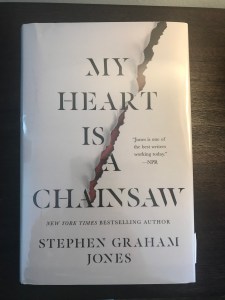
My Heart Is a Chainsaw

Rating: 4.5/5 Knives

What if all of the slasher movies you’ve watched were a survival guide for when a killer descends on your town? That’s just what happens to Jade Daniels, a high school senior who’s obsessed with horror novels, in My Heart Is a Chainsaw by Stephen Graham Jones. Jade suspects a slasher will appear in her hometown of Proofrock, Idaho. So when a new student, who’s clearly the final girl who can stop the slasher, joins her school, Jade is relieved. Jade is an expert on horror movies and knows how the slasher can be defeated, so she needs to give Letha horror history lessons so she’s equipped to stop whatever is haunting Proofrock.

But it soon becomes clear that Jade is battling her own demons. Will anyone in Proofrock who can do something to stop people from dying actually listen to Jade? Or is her obsession with a Proofrock killer just a desperate cry for help? 

My Heart Is a Chainsaw is full of heart (and chainsaws, as promised in the title). Jade initially seems obsessed with horror movies, writing extra credit papers for her history teacher about slasher movies. But her obsession becomes endearing. Jade’s mom is mostly out of the picture, her dad seems, at best, ambivalent about her, and she doesn’t have many friends, so scary movies are Jade’s closest companions.

The beauty of My Heart Is a Chainsaw lies in Jones’ ability to tell a creepy slasher story while simultaneously telling Jade’s coming-of-age story. Jade comes to terms with the town police and other adults in charge refusing to do anything to stop pain and suffering (a common slasher trope), and this failure is mirrored by Jade’s parents. Jones tells the story as though it were a slasher, but then he subverts frequent slasher themes to tell a story full of depth and nuance. s

My Heart Is a Chainsaw is a must-read for any fans of slasher films. Jones references a lot of slasher and horror movies, so in addition to being a great story, it’s a mini slasher history class. (And you’ll likely come away from this book with a long list of movies to watch.)

Anyone who likes slasher stories and/or stories with heart needs to read My Heart Is a Chainsaw.

PS-I’m a big baby and this book’s acknowledgements made me tear up. Jones thanks his wife and says, “My heart is a chainsaw, yes, but you’re the one who starts it.” Someone must be cutting onions on this blog post.

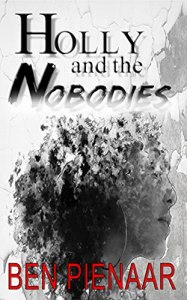
Holly and the Nobodies

Rating: 4/5 Nobodies

An odd little girl living in a strange house befriends you and invites you past the front gates. What could possibly go wrong?

As it turns out, a lot. In Holly and the Nobodies by Ben Pienaar, Holly Anderson, a young girl who is seemingly by herself in her front yard, talks to James, a high school student who is passing by the house. James gets a strange vibe from Holly and continues on to school. When James tells his friend Alex about this strange girl, Alex takes pity on her, thinking she may be lonely or living with abusive parents. But Alex’s decision to be nice to Holly sets off a chain of harrowing events.

Holly and her house have strange abilities. Holly can create beings, called nobodies, to keep her company. But the nobodies can’t come close to real human friends, like Alex and James. Holly knows that if she can lure Alex and James into her house, the house will do the work of keeping them there. Alex and James soon realize that if they want to survive, they need to get away from Holly’s house, but nobodies, the house and Holly want to keep them there at all costs.

Holly and the Nobodies gets readers immersed in the story immediately. Within the first chapter, it’s clear something is off about Holly. Pienaar does a fantastic job setting the scene and gripping readers’ attention immediately. Holly and the Nobodies is compelling and nearly impossible to put down. It is filled with action and keeps you on the edge of your seat.

Holly and the Nobodies is creepy, but it isn’t gory. (Which makes sense, as I’ve realized it is considered a YA book. Also, if you’re sleeping on YA horror, stop being silly. Some of my favorite horror books have been YA.) I appreciate the ability to write something odd that puts readers on edge without graphically describing violence.

The action starts right away in this book, which means readers do not know much about the main characters initially. Pienaar expertly provides clues about characters’ backstories while progressing the plot along. Readers learn about James’ negligent father and Alex’s overbearing parents as they are learning about the extent of Holly’s cruelty. It’s this ability to provide exposition while keeping readers’ interest that makes Holly and the Nobodies a fun, entertaining and enjoyable read. I highly recommend it for anyone interested in an exciting scary story.

Disclaimer: I received a complimentary ebook copy of Holly and the Nobodies for review. All opinions are my own and independent of receiving a free copy.
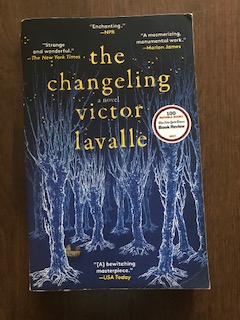
The Changeling

Rating: 5/5 Rare Books

Rare-bookseller Apollo Kagwa wanted to be the father he didn’t have. But a horrific act of violence against his son leads Apollo to discover a fantasy world hidden in New York City, full of the evil that feeds our nightmares. Victor LaValle’s The Changeling is a haunting, mesmerizing modern-day fairy tale that will stick with readers long after they’ve finished the book.

The Changeling follows Apollo’s journey into fatherhood. His own father disappeared when Apollo was young. Emma, Apollo’s wife, seems to have some signs of postpartum depression. Emma does something truly terrifying to the baby and vanishes. Much of the book focuses on Apollo’s journey to find his wife and baby and get some answers as to why Emma did what she did.

The Changeling is equal parts horror novel and fairy tale, with a dash of Chicken Soup for the Soul. Through Apollo’s quest, LaValle explores the complex themes of parenthood, racism, and love. It has a macabre backdrop, but The Changeling is fundamentally about how far parents will go out of love for their child.

LaValle expertly describes a fantasy world hiding in plain sight in New York City. His phenomenal, skilled world building is just one of the many reasons this book is perfection. Though the book takes place in modern-day New York City, something about it feels like a fairy tale that you, your parents, your grandparents, and their grandparents grew up hearing. It’s a universal and timeless tale that’s part of our DNA. LaValle is a skilled storyteller, and he writes The Changeling in a way that will make you feel like this is a familiar story from your childhood that you forgot, and reading it will feel like a lifelong itch has finally been scratched.

LaValle’s juxtaposition of fairy tale tropes with mundane daily things, like putting boxes in a car, makes The Changeling feel more realistic and, therefore, creepier. He has a way of writing vividly, and certain parts were so gross they’ll make your skin crawl. The way he described a warm room with all the radiators on made me feel toasty (despite being on a tundra-cool airplane).

The Changeling is a joy to read, and LaValle’s writing style makes it a page-turner. The dialog flows so naturally that reading it feels like overhearing a conversation. The writing seems effortless, and every single word has a purpose. LaValle shows readers what characters are like and what their motivations are; he never tells. It’s this masterful storytelling that makes The Changeling feel more like hearing a scary story from a relative than reading a book written by a stranger.

If you liked The Changeling, check out LaValle’s other work, including The Devil in Silver and The Ballad of Black Tom.

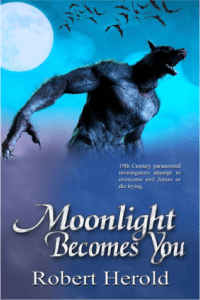
Moonlight Becomes You

Rating: 4/5 silver bullets

Moonlight Becomes You, the second novel in the Eidola Project series by Robert Herold, tells the story of a group of paranormal investigators who travel to Petersburg, Virginia, to determine what’s causing the brutal murders of Black people in the town. (Local law enforcement isn’t particularly interested in investigating as white people haven’t been affected much.) It is a captivating and gripping read full of suspense, action, and, of course, horror.

Moonlight Becomes You takes place in a town plagued by the KKK. The Eidola Project (the group of investigators) determines there may be a werewolf (or werewolves) terrorizing the town. (Come on; this isn’t a spoiler. There’s a werewolf on the cover of the book.) Herold creates an interesting juxtaposition between the horror and violence caused by the KKK and the horror and violence caused by the werewolf.

What’s most compelling about this book is the depth and complexity of characters. Nigel, a white man who fought for the South during the Civil War, struggles to relate to Eidola Project team member Edgar, a Black man, and Edgar struggles to deal with the racism he experiences from Nigel and society at large. This book provides readers with a creepy and compelling backstory on Nigel and his “gifts,” and we also see a lot of depth and growth from Nigel.

Herold’s phenomenal use of vivid imagery often causes a visceral reaction. He describes a werewolf transforming as including “an audible cracking of bones and cartilage.” He describes a corpse as “difficult to recognize as a person, except for the remnants of clothing and the hair still clinging to the back of a crushed skull…Nigel could see the halves of the rib cage spread wide to reveal the empty cavity of his chest.” Much of the creepiness of this book comes from Herold’s use of descriptive language that paints a gory and disturbing picture.

As noted earlier, this is the second book in a series. I’d highly recommend reading the first book, The Eidola Project, before you read this. The Eidola Project sets up how this investigative group got together and what their individual skills are. A lot of complex character development takes places in Moonlight Becomes You, but without reading the first book in the series, some of this character development may lack context.

One of the best things about this book is that, though it was episodic in terms of being about this group finding a werewolf, Herold has set up some broader themes and topics that I hope we’ll see in upcoming books. Nigel (to me at least) was a piece of crap in the first book, but now that I know how complicated and messy his backstory is, I sympathize with him, and I want to know what will happen to him in the future. The character development and powerful imagery make Moonlight Becomes You a must-read book for anyone interested in a classic monster story.

I need to warn you that though the werewolf plot is resolved at the end of the book, there’s a little bit of a cliffhanger. If you read this book, you’ll be desperate to read the next in the series. (I audibly gasped at the end of the book. I’m eagerly awaiting the next in the series!)

Disclaimer: I received a complimentary ebook copy of Moonlight Becomes You from the author. All opinions are my own and independent of receiving a free copy.
The Stand

Rating: 3/5 Payday wrappers

The Stand by Stephen King is a classic good-vs.-evil story, set during and immediately following a highly contagious and lethal flu kills most of the population. The beginning of the book follows how the flu spreads. Perhaps it has to do with living in a pandemic, but reading about this flu spreading was incredibly creepy. It hit close to home, and King perfectly captured the anxiety and fear felt in the early days of the pandemic. (Which still isn’t over! Wear a mask!) Fortunately for us, COVID is much less deadly than the flu imagined by King.

In The Stand, some people are immune to the flu, and these survivors have odd dreams. They dream of a kind older woman named Mother Abagail, who seems safe, caring, and warm. But they also dream of a more nefarious presence: Randall Flagg, AKA the dark man. The survivors know that these dreams are not mere dreams; they’re messages. They can join Mother Abagail or Randall Flagg in the post-flu United States. 

Mother Abagail’s love and peace draws some survivors in, while Randall’s use of violence and fear pulls others. The Stand asks if in a world completely reimagined, do good and evil still exist? Will good triumph over evil, or will people always choose their survival over their morals? 

The Stand would have been rated higher had it been shorter. My copy was just over 1,100 pages. The first 700 pages or so are a lot of exposition and background on all of the survivors. Some action happens, but it’s akin to the beginning of a meeting when you’re doing an extravagant icebreaker activity and you just want it to be over so you can discuss budgets or whatever. While it’s necessary to know the characters’ backstory and motivations, there was no need to spend so much time on exposition. (I honestly didn’t enjoy the first 700 pages, but then it got good.) 

Typically, King rightfully doesn’t get credit for the way he writes people of color and women. This book was originally published in 1978. We can say that times have changed and that people are more aware of racial microaggressions while still acknowledging that elements of this book don’t hold up well. King writes obsessively about one character’s “odd Chinese eyes.” That’s a direct quote. And he mentions that character’s odd Chinese eyes multiple times. (No, I’m not being too sensitive. I read this around the time that multiple innocent Asian people in Atlanta were murdered. Microaggressions are symptoms of a deeper, systemic issue. Not calling out this tomfoolery would make me part of the problem.) 

Overall, The Stand is an interesting story about good vs. evil, and a super-flu kicking off the events leading to the ultimate stand between good and evil makes for a fascinating backdrop. King does a phenomenal job tying together the stories of seemingly unconnected people. Had The Stand been shorter or gotten to the big showdown between good forces and evil forces sooner, I’d highly recommend it.

The Route of Ice and Salt

Rating: 4/5 boxes of dirt

“Anyone could be considered a monster. And monsters were assassinated with impunity.” –The Route of Ice and Salt

The Route of Ice and Salt by José Luis Zárate (and translated from Spanish into English by David Bowles) is a poetic and haunting novella about the story of a sea captain struggling with his closeted homosexuality, told through the events of Dracula’s transport to England. The captain is leading a small crew on the Demeter charged with delivering mysterious boxes of dirt. The captain is battling with his homosexuality, but his thoughts quickly turn to something that seems off on the Demeter. The schooner’s rats act oddly, and soon, crewmembers disappear. What’s happening on the Demeter, and can the captain stop it before it’s too late?

The Route of Ice and Salt is a fantastic story. Zárate builds suspense flawlessly, and despite how creepy and scary the novella is, it isn’t too graphic. He manages to combine poetic language and horror to create a work that is terribly beautiful (or beautifully terrible?).

Consider this quote: “Without hesitation, he chose the black face of the drowned, a mouth unhinged by despair, hands that tear bloody grooves in a throat closed forever by the sea.” Perhaps it’s because the original text was written in Spanish, but having the adjectives come after the nouns makes the impact that much scarier. Rather than imagining an unhinged mouth, readers picture a mouth that is then unhinged, making the reader’s mind commit the violence. (If your Spanish is good enough, you may want to try reading the original novella in Spanish. If I were capable of doing more in Spanish than talking about my weekend and asking how much things cost, I would absolutely read it.)

Bowles’ beautiful translation of the novella took diligence and care, as every word is purposeful and the vivid imagery was clearly retained from Zárate’s original work. Though this is a novella, much of it is poetic, and it may not be the quickest read; expect to reread certain elements multiple times to understand the true meaning of the text.

The Route of Ice and Salt is a haunting tale about our pasts, hunger, and if we can escape who we truly are. Bowles’ translation of The Route of Ice and Salt is one not to be missed by Dracula fans or anyone craving beautifully written horror.

Disclaimer: I received a complimentary ebook copy of The Route of Ice and Salt from Netgalley.