
2/5 plastic bags
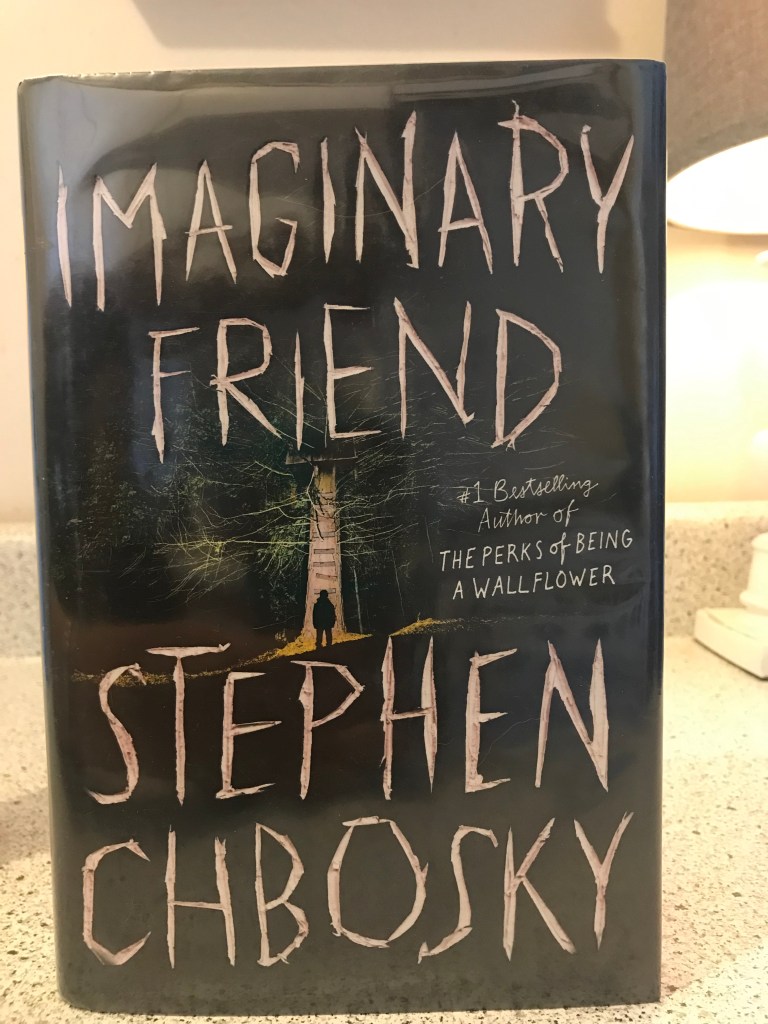
The fight between good and evil, light and dark, and angels and demons is a universal tale and has served as the foundation for millions of stories. It is this struggle that serves as the primary conflict in Imaginary Friend by Stephen Chbosky.
Imaginary Friend tells the story of 7-year-old Christopher, a boy whose mother moves him to Pennsylvania to escape her abusive partner. Christopher struggles with school, but he’s a sweet kid. He disappears into a forest and vanishes for six days. When he comes out, he suddenly aces all of his tests, and he just knows things about the people around him. And the mysterious, possibly imaginary, nice man who helped him in the forest is nowhere to be found.
The nice man stays in touch with Christopher. And to defeat a strong, powerful, evil force, Christopher has to build a tree house in the middle of the forest in which he disappeared, otherwise terrible things will happen to everyone in town. The tree house is a portal to an imaginary world, which looks like the regular world, but for his own safety, Christopher can’t go there at night and can’t go there without the nice man.
The beginning of this book, while a bit slow paced, tells a compelling story. One of the most complex and interesting characters is Ambrose, an older man who is grappling with guilt over his role in the disappearance of his little brother, nearly 50 years ago. It would’ve been really interesting to focus more on Ambrose and possibly even tell the story from his point of view.
One of the biggest challenges in reading Imaginary Friend is the writing style. In the last third of the book, big chunks of dialog and some exposition iS wRitteN likE thiS, which is incredibly distracting and makes me think of this SpongeBob meme. (Also, people don’t speak in capital letters, unless they’re being used to emphasize pronunciation.) I initially thought maybe this was some kind of secret message, but then I read about 6 e’s in a row and realized it was just a creative choice.

Another challenge with this book is the lack of subtlety. For example, the number 217 comes up a lot (possibly in homage to my favorite book, The Shining). I mean it comes up a lot. Trust the reader! We are smart, and subtlety is appreciated! In fact, references are more meaningful when it takes a while for them to sink in. Furthermore, it’s bold to reference one of the greatest horror novels of all time so much. It distracted me from Imaginary Friend and just made me wish I were reading The Shining instead. (They’re approximately the same length. If you have time to read ~700 pages of a book, pick up The Shining.)
Mild spoiler alert: This book did not need to be nearly as long as it was, and all of the buildup was not worth it. If you have trouble with dairy, take a Lactaid before reading this, because the ending is cheesy. Forgiveness is effortless, and generational trauma ends in just one night. Imaginary Friend lacks the depth and nuanced understanding of some of the topics addressed in the book, such as domestic violence and child abuse.
And as nice as it can be to go into a book with no expectations or no ideas of what’s going to happen, it’s important to know the book’s genre and for publishers to market their books accordingly. Imaginary Friend should have been upfront about the overall Biblical theme. Readers should know what they’re getting into before picking up a 700-page novel. And as with The Shining allusions, the Biblical allusions are not subtle. That said, I’m not even sure a Christian audience would love Imaginary Friend, as there’s a bunch of swearing and some content that may be offensive to people who want to read Christian horror. (Side note: Is Christian horror a thing? I think it absolutely should be.)
Imaginary Friend touched on complex and difficult topics and had potential to be a classic story of good vs. evil and if those forces are as oppositional as we think, but the lack of nuance and jarring writing style limited its potential.
If you are looking for an interesting story that blurs the line between good and evil, check out The Hunger.
 The Haunting of Lit House